

Frozen shoulder treatment is often the only thing on your mind when simply reaching for a coffee mug or putting on a jacket becomes an agonizing daily struggle. Also known as adhesive capsulitis, this condition can severely restrict your life, turning simple movements into painful challenges. At City Orthopaedics & Sports Medicine, we understand that shoulder pain affects more than just your arm. It affects your entire routine, from getting dressed in the morning to sleeping comfortably at night.
Dr. Oladapo M. Babatunde, MD, FAAOS, a board-certified orthopedic surgeon recognized as a Top Doctor by New York Magazine and Jersey’s Best for seven consecutive years, leads our shoulder care program. He specializes in the diagnosis and treatment of orthopedic shoulder conditions at our offices in East Rutherford, Paramus, and West Orange, NJ. Whether your stiffness resulted from a past injury or seemed to appear out of nowhere, our goal is to help you regain your shoulder mobility and return to the activities you love.
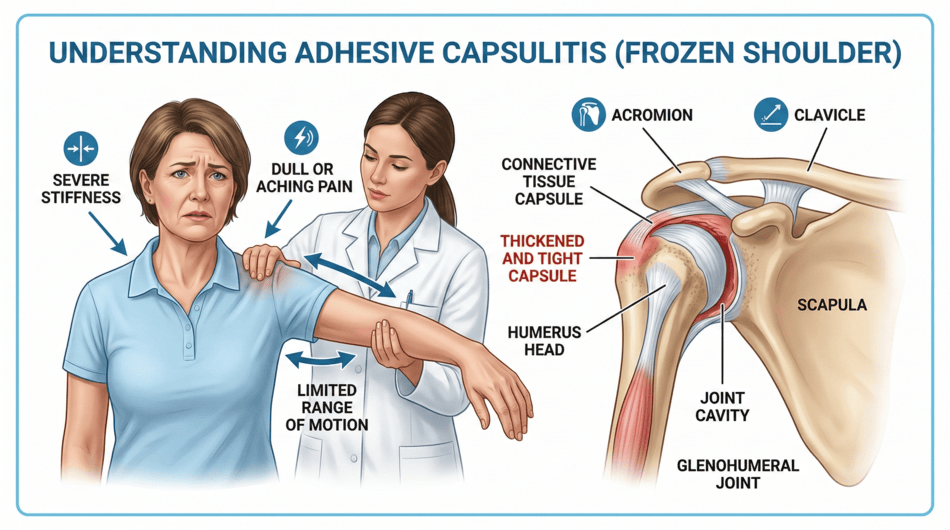
What Is Frozen Shoulder?
Adhesive capsulitis occurs when the connective tissue surrounding the shoulder joint, called the joint capsule, becomes inflamed, thickened, and tight. Over time, thick bands of scar tissue called adhesions develop inside the capsule. The joint also produces less synovial fluid, which normally keeps your shoulder lubricated and moving smoothly. As a result, the shoulder becomes progressively stiff and painful, and your range of motion decreases significantly.
Who Is Most at Risk?
Frozen shoulder most commonly affects adults between the ages of 40 and 60, and it occurs more often in women than men. Several medical conditions also increase your risk, including diabetes, thyroid disorders, heart disease, and autoimmune conditions. In addition, the condition frequently develops after an injury or surgery that limits shoulder movement for an extended period, such as a fracture or rotator cuff injury.
The Three Stages of Frozen Shoulder
One of the most important things to understand about frozen shoulder is that it progresses through three predictable stages. Knowing which stage you are in helps guide the right treatment approach.
Stage 1: Freezing (6 Weeks to 9 Months)
Pain gradually increases during this stage, often becoming worse at night. The shoulder begins to lose range of motion as the capsule thickens and tightens. Many patients first notice difficulty with overhead reaching or putting on a seatbelt. This is the stage where early intervention can make the biggest difference in shortening overall recovery time.
Stage 2: Frozen (4 to 6 Months)
Pain may actually begin to decrease during this stage, but the stiffness becomes more severe. Daily activities like combing your hair, reaching into a back pocket, or fastening clothing behind your back become extremely difficult. The shoulder’s range of motion is at its most restricted point.
Stage 3: Thawing (6 Months to 2 Years)
Your range of motion slowly begins to improve during the thawing stage. Pain continues to lessen, and daily activities gradually become easier. Most patients recover 80 to 90 percent of their normal shoulder function with proper treatment. Full recovery typically takes anywhere from one to three years from initial onset, though early and consistent treatment can shorten this timeline significantly.
Frozen Shoulder Symptoms
While shoulder pain from multiple causes exists, frozen shoulder has a distinct pattern. You may experience:
- Dull or aching pain: The pain is often constant and typically worsens at night, making it difficult to sleep on the affected side.
- Progressive stiffness: Your shoulder becomes increasingly difficult to move over weeks and months, rather than all at once.
- Limited range of motion: Reaching overhead, behind your back, or across your body becomes painful or impossible.
- Radiating discomfort: Pain may spread into the upper arm or toward the neck, which can sometimes be confused with other conditions.
Our physicians evaluate each patient thoroughly to ensure an accurate diagnosis. Because upper arm pain and dysfunction can stem from various issues, including shoulder arthritis or clavicle fractures, individualized evaluation is essential.
How Is Frozen Shoulder Diagnosed?
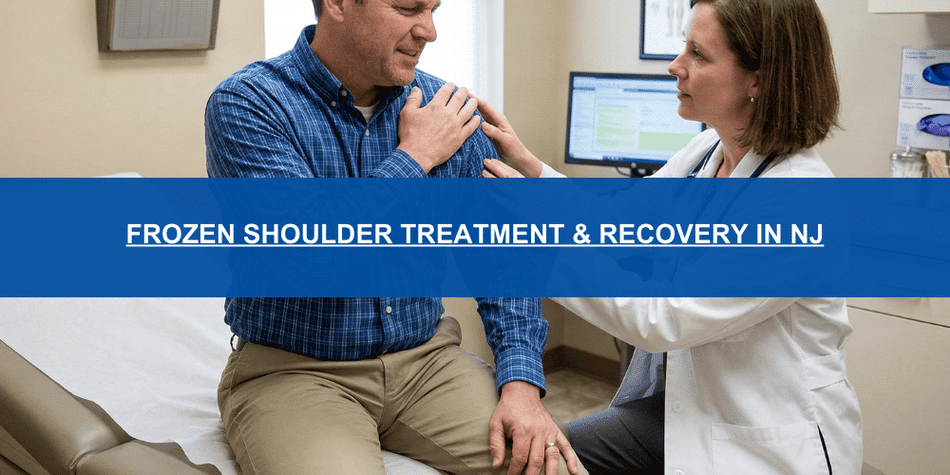
Diagnosis is based on a combination of your medical history, a hands-on physical examination, and imaging tests. During the physical exam, Dr. Babatunde will assess both your active range of motion (what you can move on your own) and your passive range of motion (what the doctor can move for you). In frozen shoulder, both active and passive motion are restricted, which helps distinguish it from conditions like rotator cuff tears where passive motion is often preserved.
X-rays help rule out other causes of stiffness such as arthritis or bone abnormalities. An MRI may also be ordered to evaluate the soft tissues around the shoulder and confirm that no other injuries are contributing to your symptoms.
Frozen Shoulder Treatment: Non-Surgical Options
At City Orthopaedics, we follow a conservative-first approach. In many cases, frozen shoulder responds well to non-surgical treatment, especially when intervention begins early. Our treatment options include:
- Physical therapy: This is the cornerstone of frozen shoulder treatment. A structured program of gentle stretching and strengthening exercises helps restore movement and flexibility. Importantly, therapy must be stage-appropriate. Overly aggressive stretching during the freezing stage can worsen pain and inflammation. We provide written instructions and progression guidelines for home exercises as well.
- Anti-inflammatory medications: Over-the-counter pain relievers like ibuprofen or acetaminophen can help manage pain and reduce inflammation, allowing for better participation in therapy.
- Corticosteroid injections: Cortisone injections delivered directly into the shoulder joint can significantly reduce inflammation and pain, especially during the early freezing stage. This often creates a window of relief that allows physical therapy to be more effective.
- Hydrodilatation: This procedure involves injecting a large volume of sterile fluid into the joint capsule to physically expand and stretch it from the inside out. Hydrodilatation can improve mobility relatively quickly and is particularly helpful when stiffness is the primary complaint.
- Activity modification: We provide guidance on how to adjust daily tasks and sleeping positions to reduce pain while healing progresses.
“Frozen shoulder can feel overwhelming because it limits so many everyday activities. However, the condition follows a predictable pattern, and most patients improve significantly with the right combination of therapy, medication, and patience. Surgery is rarely the first answer. We focus on finding the least invasive path that gets you back to your life.”
— Dr. Oladapo M. Babatunde, MD, FAAOS
When Is Surgery Necessary for Frozen Shoulder?
Surgery becomes the right option when conservative treatment has not produced meaningful improvement after six to twelve months, or when your functional limitations are severely affecting your quality of life. You and Dr. Babatunde may discuss surgical intervention if:
- Physical therapy and injections have not restored adequate range of motion
- Pain and stiffness continue to prevent you from performing daily activities
- Your condition has plateaued in the frozen stage without signs of improvement
- You have specific functional goals (returning to work, sports, or hobbies) that require faster recovery
Arthroscopic Capsular Release
Arthroscopic capsular release is the most common surgical approach for frozen shoulder today. Using a small camera (arthroscope) and specialized instruments inserted through tiny incisions, the surgeon carefully cuts through the tightest portions of the joint capsule. This immediately improves range of motion. The procedure is minimally invasive, and most patients go home the same day.
Manipulation Under Anesthesia
In some cases, the surgeon may perform a manipulation under anesthesia, where the shoulder is moved through its full range of motion while you are asleep. This breaks up the adhesions and scar tissue restricting your movement. This approach is less common today because arthroscopic release offers more controlled and predictable results, but it remains an option in certain situations.

Recovery Timeline After Frozen Shoulder Treatment
Recovery depends on the stage of your condition and the treatment path you follow.
Non-Surgical Recovery
With consistent physical therapy and appropriate treatment, most patients see gradual improvement over several months. The full natural course of frozen shoulder (from onset through the thawing stage) typically takes one to three years. However, early intervention with corticosteroid injections, hydrodilatation, and targeted physical therapy can significantly shorten this timeline.
Post-Surgical Recovery
After arthroscopic capsular release, aggressive range-of-motion physical therapy begins almost immediately, usually within the first day or two. This early movement is critical to prevent scar tissue from reforming. During the first six weeks, the primary focus is on regaining range of motion. Therapy then progresses to strengthening exercises, with most patients returning to normal activities by about three months after surgery.
- Week 1 to 2: A sling is worn for comfort, but guided shoulder movement starts right away under physical therapy supervision.
- Weeks 2 to 6: Range-of-motion exercises intensify. Most patients notice significant improvement in their ability to reach and move during this phase.
- Months 2 to 3: Strengthening exercises begin. Patients gradually return to normal daily activities, work, and light recreational activities.
- Months 3 to 6: Full return to sports and demanding physical activities, assuming range of motion and strength are near normal.
Preventing Frozen Shoulder
While not every case of frozen shoulder can be prevented, several strategies reduce your risk:
- Stay active after injury or surgery: The most important preventive step is recovering shoulder mobility quickly after any injury, surgery, or period of immobilization. Prolonged rest without movement is one of the biggest risk factors.
- Manage underlying health conditions: If you have diabetes, keeping your blood sugar well controlled has been shown to improve outcomes and reduce the likelihood of developing frozen shoulder. Similarly, managing thyroid disorders and other metabolic conditions helps lower your risk.
- Maintain regular shoulder movement: Simple daily range-of-motion exercises, especially if you work a desk job or have limited upper body activity, help keep the joint capsule flexible.
- Seek early evaluation: If you notice increasing shoulder stiffness or pain that does not improve within a few weeks, seeing an orthopedic specialist early can prevent the condition from progressing to the frozen stage.
Why Patients Choose City Orthopaedics for Frozen Shoulder Treatment
We strive to exceed patients’ expectations for comfort, convenience, and quality of care. Our practice has earned a 5.0 Google rating based on hundreds of patient reviews, and Dr. Babatunde has been recognized as a Top Doctor for seven consecutive years.
Convenient Access Across New Jersey
We serve patients throughout Bergen and Essex Counties and the surrounding region with offices in:
- East Rutherford, NJ (Primary hub, Bergen County)
- Paramus, NJ (Bergen County)
- West Orange, NJ (Essex County)
No referral is needed to schedule an appointment, and we accept most major insurance plans.
Trusted Expertise
Our team is committed to providing honest, evidence-based recommendations. If you are unsure about a previous diagnosis, we also provide comprehensive second opinion services to give you peace of mind.
Take Action Against Frozen Shoulder
You do not have to live with restricted movement. Whether you need frozen shoulder treatment through guided therapy, injections, or surgical intervention, City Orthopaedics & Sports Medicine is here to help. Dr. Babatunde’s personalized approach to treatment, combining both non-surgical and surgical methods, ensures the best outcomes for shoulder mobility and pain relief.
Schedule your appointment today and take the first step toward restoring your shoulder health.
Frequently Asked Questions
What is the fastest way to treat frozen shoulder?
There is no instant cure, but a combination of physical therapy, corticosteroid injections, and consistent home exercises is often the most effective non-surgical route. In some cases, hydrodilatation can provide faster improvement in mobility. Dr. Babatunde evaluates each patient individually to create a customized plan that speeds up recovery safely.
What are the three stages of frozen shoulder?
Frozen shoulder progresses through three stages: the freezing stage (increasing pain and decreasing motion over 6 weeks to 9 months), the frozen stage (pain may lessen but stiffness peaks, lasting 4 to 6 months), and the thawing stage (gradual return of motion over 6 months to 2 years). Treatment is tailored to the specific stage you are in.
Does physical therapy help with adhesive capsulitis?
Yes, physical therapy is essential and serves as the cornerstone of treatment. It involves guided exercises designed to restore strength, flexibility, and function. Importantly, therapy intensity must match your current stage, as overly aggressive stretching during the freezing phase can worsen symptoms.
Will I eventually need surgery for frozen shoulder?
Not necessarily. Most patients recover with non-surgical management including physical therapy, medications, and injections. Surgery is recommended when conservative treatment has not produced meaningful improvement after six to twelve months or when functional limitations severely impact daily life.
How long does recovery take after frozen shoulder surgery?
After arthroscopic capsular release, physical therapy begins within the first day or two. Range-of-motion exercises are the focus during the first six weeks, followed by strengthening. Most patients return to normal activities by about three months after surgery, with full recovery typically achieved within three to six months.
Where can I get frozen shoulder treatment in New Jersey?
City Orthopaedics & Sports Medicine offers frozen shoulder treatment at three convenient New Jersey locations: East Rutherford, Paramus, and West Orange. No referral is required. Book your appointment online or call us directly.