

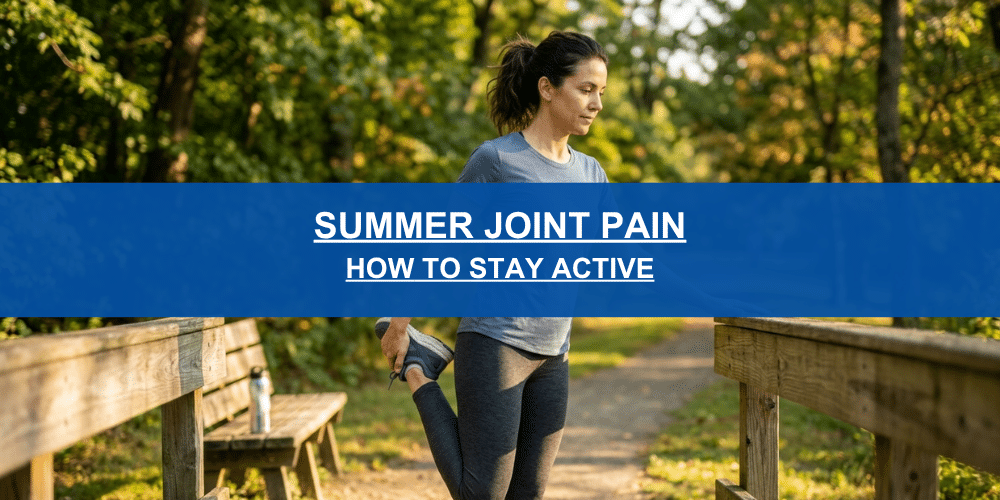
Summer Joint Pain: How to Finish the Season Strong
Summer joint pain catches many active people off guard. After months of hiking, golf, pickleball, swimming, and yard work, the cumulative effect of all that movement starts to show up as stiffness, aching, and soreness that was not there in June. The good news is that most late-summer joint discomfort responds well to a few smart adjustments, and when it does not, early evaluation almost always leads to simpler, faster treatment. This guide breaks down exactly what your joints are dealing with this time of year and what you can do about it.
At City Orthopaedics & Sports Medicine, Dr. Oladapo M. Babatunde, MD, FAAOS, a board-certified orthopaedic surgeon recognized as a “Top Doctor” by New York Magazine and Jersey’s Best for seven consecutive years, helps patients across East Rutherford, Paramus, and West Orange, NJ stay active and pain-free through every season. Whether you need a quick evaluation or a comprehensive treatment plan, no referral is required and most major insurance plans are accepted.
Why Late Summer Is Hard on Your Joints
Your joints have been working hard since spring. By late summer, the effects of months of repetitive activity have had time to accumulate, and the lingering heat adds another layer of stress. Understanding why this time of year is particularly demanding helps explain what your body is telling you.
Cumulative wear from repetitive motion. Playing the same sport or doing the same chore week after week loads the same muscles, tendons, and cartilage surfaces repeatedly. Over time, that repetitive stress can lead to overuse injuries like tendinitis, bursitis, and cartilage irritation. Research shows that overuse injuries account for roughly half of all sports-related injuries, making them far more common than acute injuries like sprains and fractures.
Heat and dehydration. The cartilage that cushions your joints is made up of approximately 65 to 80 percent water. Synovial fluid, the slippery substance that lubricates your joints and delivers nutrients to cartilage, is also primarily water-based. When you are dehydrated, your body produces less synovial fluid and your cartilage loses some of its shock-absorbing ability. The result is increased friction, stiffer joints, and a higher risk of strains and sprains.
Muscle fatigue. Tired muscles do a worse job of stabilizing and protecting joints. After a long season of activity, muscle fatigue can change the way you move without you realizing it, placing extra stress on joint surfaces that are already working hard.
Stay Hydrated to Protect Your Joints
Hydration is one of the simplest and most effective things you can do for joint health, and it goes well beyond avoiding overheating. When you drink enough water throughout the day, you help maintain the volume and thickness of your synovial fluid, keep cartilage pliable and resilient, and support the muscle function that protects your joints during activity.
Do not wait until you feel thirsty. Thirst is a late signal that your body is already mildly dehydrated. Instead, drink water consistently throughout the day and increase your intake on hot days or before, during, and after longer activities. Adding water-rich foods like watermelon, cucumbers, and oranges to your diet also helps.
Warm Up Before Every Activity
It is tempting to jump straight into a familiar activity, especially one you have done all summer. However, cold muscles and stiff joints are significantly more prone to injury. A proper warm-up increases blood flow to muscles and joints, improves the elasticity of tendons and ligaments, and prepares your nervous system for the demands ahead.
Spend five to ten minutes on light movement and dynamic stretching before you start. Walking, gentle arm circles, leg swings, and bodyweight squats are all effective. Save deeper, static stretching for after your activity, when your muscles are warm and the stretching is most effective and comfortable.
Mix Up Your Activities to Prevent Overuse Injuries
Repeating the same motion over and over is one of the most common causes of summer joint pain. A single sport or chore performed week after week loads the same structures repeatedly, and by late summer, the effects of that repetitive strain have had all season to build. Cross-training gives overworked muscles and joints time to recover while keeping you active and fit.
If you play tennis or pickleball several times a week, balance those sessions with swimming or cycling, which are lower-impact and easier on the joints. If your weekends revolve around gardening or yard work, alternate with walks or light strength training during the week. The goal is variety, not less activity.
Overuse injuries like tendon problems in the foot and ankle and knee tendinitis are particularly common in people who specialize in one activity without adequate rest or cross-training.
Build Strength to Support Your Joints
Strong muscles act as shock absorbers, taking pressure off the joints they surround. Core strength supports your back and hips. Strong quadriceps and hamstrings protect your knees. Strong calves and ankle stabilizers protect your feet and ankles. You do not need an intense gym routine to see results.
Consistent, moderate strength work two to three times per week makes a meaningful difference in how your joints hold up through the rest of summer and into fall. Focus on functional movements like squats, lunges, planks, and resistance band exercises. If you are unsure where to start, a physical therapist or athletic trainer can design a simple program tailored to your activity level and any existing joint concerns.
“Most of the late-summer joint issues I see in the office could have been avoided or caught much earlier. The combination of months of repetitive activity and dehydration in the heat creates a perfect setup for overuse injuries. A few simple habits, like varying your activities, staying hydrated, and not ignoring early warning signs, go a long way toward keeping you active and out of trouble.”
— Dr. Oladapo M. Babatunde, MD, FAAOS, Medical Director, City Orthopaedics & Sports Medicine
Know the Difference: Normal Soreness vs. Joint Injury
Some muscle soreness after an active day is completely normal and usually fades within a day or two. Joint pain is different, and knowing how to tell the two apart is one of the most practical skills any active person can develop.
Normal post-exercise soreness typically feels dull and achy, spreads across an entire muscle group, appears on both sides of the body, and resolves on its own within three to five days. It often feels better as you warm up and move. For a deeper breakdown of these signals, read our guide on normal soreness vs. injury and how to listen to your body.
Joint pain, on the other hand, tends to be localized to a specific spot inside or around a joint. It often comes with swelling, stiffness, clicking, catching, or a limited range of motion. Most importantly, it tends to get worse with continued activity rather than better. These are signals that something structural may need attention, and pushing through them often turns a small, treatable problem into a bigger one.
When to See an Orthopaedic Specialist
Most late-summer aches respond well to rest, ice, and a few days of lighter activity. However, certain signs mean it is time to have a professional evaluation rather than continuing to manage things on your own:
- Pain that lasts longer than a week despite rest and home care
- Swelling inside or around a joint that does not go down within a few days
- Pain that keeps returning every time you resume the same activity
- A feeling of instability, giving way, or the joint “not trusting” your weight
- Clicking, catching, or locking that was not there before
- Pain that interferes with sleep or daily activities like walking, climbing stairs, or gripping
Catching a joint issue early almost always means simpler treatment, less time away from activity, and a faster return to doing what you enjoy. Waiting rarely makes things better and frequently makes them worse.
Common Late-Summer Joint Issues We Treat
The types of joint problems that peak in late summer reflect the activities most people have been doing all season. At City Orthopaedics & Sports Medicine, Dr. Babatunde and the orthopaedic team commonly evaluate and treat these conditions during the back half of summer:
Knee pain and meniscus injuries. Running, hiking, tennis, pickleball, and gardening all place significant demand on the knees. Repetitive loading can irritate cartilage, inflame tendons, or worsen an underlying meniscus tear. A sudden twist or pivot during a sport can also cause acute ligament injuries, including an ACL tear.
Shoulder and elbow pain. Overhead sports like tennis, swimming, and golf place repetitive stress on the shoulder and elbow joints. By late summer, the rotator cuff tendons and the tendons around the elbow can become inflamed and painful, especially if strength and flexibility have not kept pace with activity volume.
Hip stiffness and pain. Walking, hiking, and cycling can contribute to hip flexor tightness, bursitis, or irritation of the labrum, the ring of cartilage that stabilizes the hip joint. Hip discomfort that develops gradually over the summer and worsens with activity is worth evaluating before it progresses.
Foot and ankle pain. Ankle sprains, Achilles tendon irritation, and plantar fasciitis are among the most common lower-extremity problems in active adults during the summer months. Worn-out footwear, uneven outdoor terrain, and increased mileage all contribute. If foot or ankle pain is holding you back, Dr. Jason Hymowitz, DPM, our board-certified foot and ankle surgeon, is available at the Paramus and East Rutherford offices for specialized evaluation.
For many of these conditions, conservative treatment options like physical therapy, activity modification, bracing, and injection therapies provide effective relief without surgery. When surgery is the right answer, early diagnosis gives you the best possible outcome and recovery timeline.
Finish the Season Strong with City Orthopaedics & Sports Medicine
Summer joint pain does not have to sideline you. Whether you are dealing with a nagging ache that will not go away, a sudden injury during a weekend activity, or you simply want to make sure a minor issue does not become a major one, the orthopaedic team at City Orthopaedics & Sports Medicine is here to help. Dr. Babatunde and the team provide thorough evaluations, honest recommendations, and personalized treatment plans at three convenient Northern New Jersey locations: East Rutherford, Paramus, and West Orange.
No referral is needed, and most major insurance plans are accepted. Schedule your appointment today and get back to enjoying the rest of your summer.
1. What causes joint pain to get worse in the summer?
Several factors contribute to increased joint discomfort during the summer months. Dehydration reduces the volume of synovial fluid that lubricates your joints and affects the water content of cartilage, which is made up of 65 to 80 percent water. Additionally, months of repetitive summer activities like tennis, hiking, and gardening create cumulative stress on the same muscles and joints, leading to overuse injuries like tendinitis and bursitis.
2. How much water should I drink to protect my joints?
There is no single number that works for everyone, because hydration needs depend on your body weight, activity level, and how much you sweat. A practical approach is to drink water consistently throughout the day rather than waiting until you feel thirsty. On hot days or during longer activities, increase your intake and consider adding water-rich foods like watermelon and cucumbers to your meals.
3. How do I know if my pain is normal soreness or a real injury?
Normal muscle soreness after exercise feels dull and achy, spreads across a whole muscle group, appears on both sides of the body, and fades within three to five days. Joint pain is different. It tends to be localized to one specific spot, comes with swelling or stiffness, and gets worse with continued activity. If your pain lasts more than a week, keeps returning, or is accompanied by swelling or instability, it is time to see a specialist.
4. What are the most common summer sports injuries?
The most common summer sports injuries include knee ligament sprains and meniscus tears from pivoting sports like tennis and pickleball, rotator cuff tendinitis from overhead activities like swimming and golf, Achilles tendon irritation and ankle sprains from running and hiking on uneven terrain, and general overuse injuries caused by repetitive motion without adequate rest or cross-training.
5. Can I prevent overuse injuries without reducing my activity level?
Yes. The key is variety, not less activity. Cross-training by mixing up your activities gives overworked muscles and joints time to recover while keeping you fit. Combining your primary sport with lower-impact activities like swimming or cycling, adding two to three strength-training sessions per week, warming up before every activity, and staying hydrated all reduce your risk significantly without requiring you to slow down.
6. Where can I get treatment for summer joint pain in New Jersey?
City Orthopaedics & Sports Medicine offers comprehensive orthopaedic evaluation and treatment at three convenient locations in Northern New Jersey: East Rutherford, Paramus, and West Orange. Dr. Oladapo M. Babatunde provides expert care for knee, hip, shoulder, and sports injuries, and Dr. Jason Hymowitz is available for specialized foot and ankle care. No referral is required, and most major insurance plans are accepted. Book your appointment online today.