

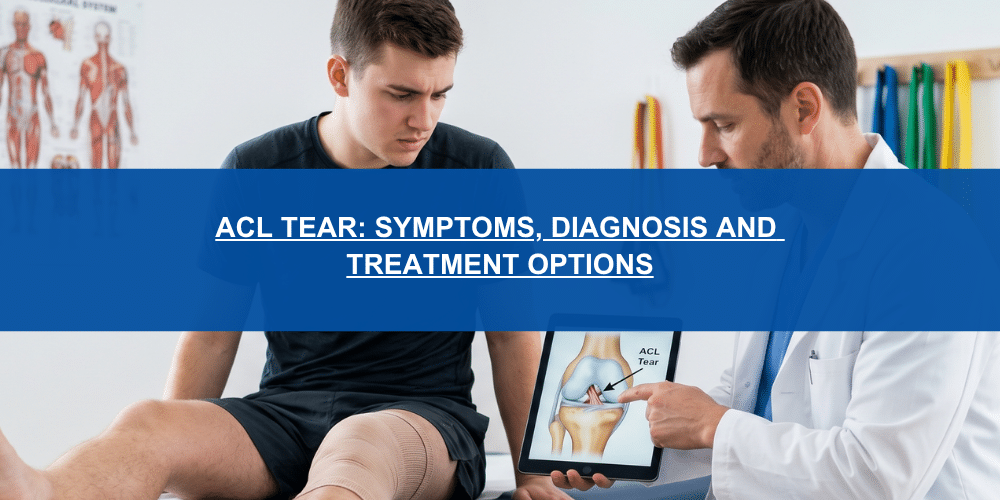
An ACL tear is one of the most common and most feared sports injuries, and for good reason. It can sideline an athlete for the better part of a year, change how a knee feels during everyday movement, and cause lasting instability if it goes untreated. If you felt a pop in your knee during a pivot, jump, or change of direction, this guide is for you.
At City Orthopaedics Sports Medicine, Dr. Oladapo M. Babatunde, MD, FAAOS provides full ACL tear treatment for patients across East Rutherford, Paramus, West Orange, NJ, and Manhattan, NY. From first diagnosis to full return-to-sport clearance, every step is managed with precision, honesty, and care built around the individual.
What Is the ACL and Why Does It Tear?
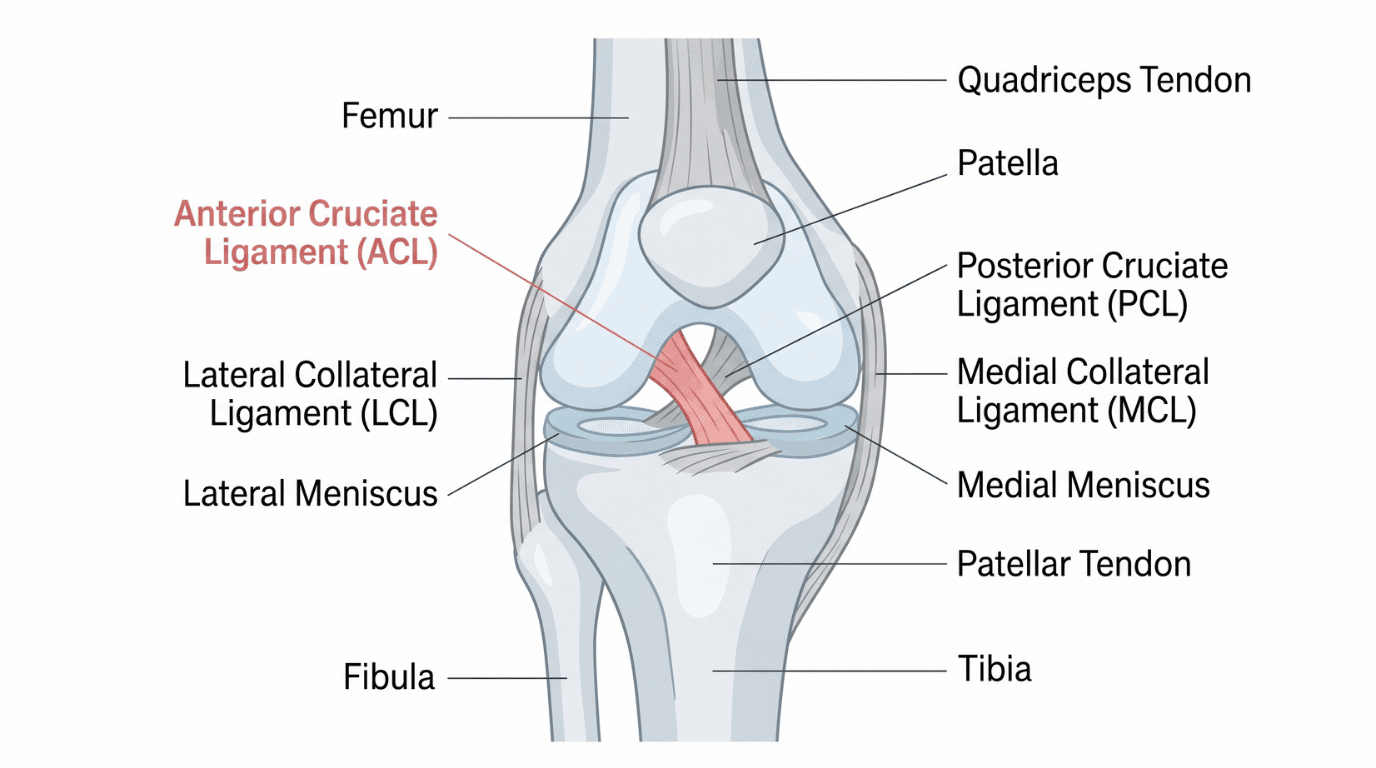
The anterior cruciate ligament, or ACL, is one of four main ligaments that stabilize the knee joint. It runs diagonally through the center of the knee, connecting the thigh bone to the shin bone. Specifically, it controls rotational stability and stops the shin bone from sliding forward under the thigh bone.
ACL tears most often happen during athletic movements that place sudden rotational or stretch stress on the knee. Common examples include:
- Planting the foot and pivoting sharply, common in soccer, basketball, and football
- Landing awkwardly from a jump in volleyball or skiing
- Stopping suddenly while running at full speed
- Taking a direct hit to the outside of the knee that forces it to collapse inward
Notably, female athletes tear their ACL at 2 to 8 times the rate of male athletes in the same sports, largely due to differences in anatomy, hormones, and muscle activation patterns.
ACL Tear Symptoms: What You Will Feel
Recognizing ACL tear symptoms early leads to faster diagnosis and better results. The most common signs of an ACL injury include the following:
- A loud pop at the moment of injury: Many patients hear or feel a clear popping sensation inside the knee the instant the ligament tears. In fact, this is one of the most reliable early signs of an ACL injury.
- Fast swelling: The knee typically swells a lot within the first few hours because of bleeding inside the joint. As a result, any knee that swells quickly after an injury always needs attention.
- Sharp pain followed by instability: Strong initial pain is common. However, many patients then notice a feeling that the knee is unstable or “giving out” when they try to put weight on it.
- Loss of full range of motion: Bending or straightening the knee fully becomes difficult, especially in the first 24 to 48 hours.
- Inability to keep playing: Most patients with a complete ACL tear simply cannot continue their activity or walk normally right after the injury.
Still, not all ACL injuries look the same. Partial tears can cause less dramatic swelling and allow some continued movement, which is exactly why a proper clinical and imaging evaluation matters. For a broader look at what could be causing your knee pain, read our guide on knee pain causes and treatment.
How City Orthopaedics Diagnoses an ACL Tear
Accurate diagnosis is the foundation of every good ACL tear treatment plan. At City Orthopaedics, the process follows three clear steps.
Hands-On Clinical Exam
First, Dr. Babatunde performs a structured physical exam using specific hands-on tests for ACL stability. The Lachman test is the most sensitive manual check for ACL tears, with accuracy above 85%. Additionally, the anterior drawer test and pivot shift test help confirm the degree of instability in the joint.
Imaging
- X-rays: Dr. Babatunde orders X-rays first to rule out fractures and assess bone alignment. However, X-rays do not show soft tissue and cannot confirm an ACL tear on their own.
- MRI: MRI is the definitive tool for ACL injury. It confirms the tear, shows whether it is partial or complete, and reveals any related damage to the meniscus, other ligaments, or joint cartilage. All of these findings shape the treatment plan.
Related Injuries
ACL tears frequently happen alongside other knee injuries. The most common related findings are meniscus tears, especially of the outer meniscus, MCL sprains, and cartilage damage. Therefore, each additional finding plays a direct role in the overall surgical plan and recovery timeline.
ACL Tear Treatment: Non-Surgical vs. Surgical Options
Not every ACL tear needs surgery. The right path depends on the tear’s severity, the patient’s age, activity demands, and whether other injuries are present. Dr. Babatunde evaluates all these factors before making any recommendation, giving every patient an honest view of both options.
Non-Surgical Management
Conservative treatment is a reasonable choice for patients with partial ACL tears, low-demand patients who do not play pivoting or cutting sports, and older adults where good stability can be restored without surgery.
Typically, non-surgical management includes the following:
- Structured physical therapy focused on building quad and hamstring strength to support the knee in place of the torn ligament
- A functional brace for stability during activity and rehabilitation
- Activity changes to avoid high-demand pivoting until stability returns
- Muscle and nerve control training to improve balance and joint awareness
However, it is important to understand that conservative treatment does not grow back the torn ligament. Instead, it builds supporting strength around the knee. For competitive athletes, this is rarely enough to return safely to full sport.
ACL Surgery: Reconstruction
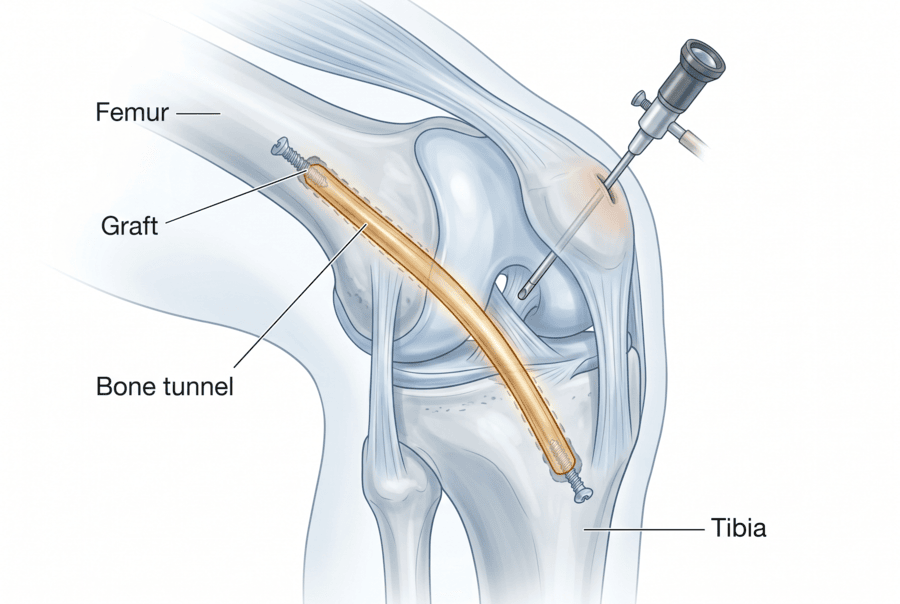
ACL surgery, also called ACL reconstruction, is the standard of care for complete ACL tears in active patients, athletes, and people with functional knee instability. Rather than sewing the torn ends back together, ACL reconstruction replaces the damaged ligament entirely with a new graft.
Dr. Babatunde performs the procedure through small incisions using a camera and specialized tools. He threads the new graft through tunnels drilled in the thigh and shin bones, then fixes it in place with hardware designed to hold it at the right angle and position to work like the original ligament.
Graft Options for ACL Reconstruction
Choosing the right graft is one of the most important decisions in ACL surgery planning. Dr. Babatunde talks through each option based on the patient’s age, activity level, and anatomy:
- Patellar tendon graft (bone-patellar tendon-bone): Generally considered the top choice for competitive athletes. It heals bone-to-bone at both ends and offers strong, long-term stability. On the other hand, it carries a higher risk of front knee pain and a somewhat harder early recovery.
- Hamstring tendon graft: A popular option for recreational athletes and younger patients. It causes less pain at the donor site than the patellar tendon and has a strong track record.
- Quadriceps tendon graft: Increasingly favored for patients who need a larger, stronger graft, especially in revision surgery cases or those with demanding return-to-sport goals.
- Allograft (donor tissue): Useful in revision surgeries, multi-ligament repairs, or in older, lower-demand patients. It removes donor site pain, though the graft takes slightly longer to become fully part of the body.
ACL Reconstruction Recovery: A Phase-by-Phase Timeline
Understanding ACL reconstruction recovery in real terms is critical for staying on track and protecting long-term results. Recovery does not follow a straight line, and timelines vary based on graft type, related injuries, and individual healing. Here is a clear phase-based breakdown.
Phase 1: Protection and Swelling Control (Weeks 0 to 2)
- Patients use crutches for protected weight-bearing in the first days
- Ice and elevation manage post-surgery swelling effectively
- Simple quad and straight-leg exercises begin within 24 to 48 hours to prevent muscle shutdown
- A brace protects the joint during early healing
Phase 2: Range of Motion Restoration (Weeks 2 to 6)
- Weight-bearing progresses gradually until patients walk without crutches
- Full knee straightening becomes the first mobility goal; bending improves steadily after that
- The clinical team actively manages swelling throughout this phase
- Formal outpatient physical therapy begins during this period
Phase 3: Strength and Balance Training (Weeks 6 to 16)
- Closed-chain strength exercises progress, including leg press, step-ups, and squats
- Single-leg balance and joint awareness training starts once strength allows
- Stationary cycling and pool-based exercise help maintain cardiovascular fitness
- Running typically begins around weeks 12 to 16, based on strength criteria rather than time alone
Phase 4: Sport-Specific Training and Return to Play (Months 4 to 9 and Beyond)
- Agility drills, cutting, and deceleration training are added progressively
- Strength symmetry testing confirms readiness before sport return
- Most athletes return to full sport between 9 and 12 months post-surgery
- At City Orthopaedics, return-to-sport clearance is milestone-based, not calendar-based. Patients must meet objective strength, stability, and movement standards before the team grants clearance.
“Returning too early is the single biggest risk factor for a re-tear,” says Dr. Babatunde.
“We use objective criteria at every phase, not just time elapsed. A knee that looks recovered at 6 months may not yet be ready to handle the forces of competitive sport. Our job is to make sure both are true before we clear someone to play.”
Torn ACL Recovery Time: Honest Expectations
The most common question from every ACL patient is how long recovery will take. Here is an honest breakdown of torn ACL recovery time by stage:
- Return to driving: 4 to 6 weeks for right knee surgery; sooner for left knee in an automatic transmission vehicle
- Return to desk work: 1 to 2 weeks in most cases
- Return to light jogging: 12 to 16 weeks, once strength criteria are met
- Return to non-contact practice: 6 to 8 months
- Return to full competitive sport: 9 to 12 months as the standard target, with some high-demand cases taking up to 14 months
Research shows that re-tear rates drop significantly when athletes wait until at least 9 months and meet objective strength benchmarks before returning. In fact, patients who return at 6 months face re-tear rates estimated at 3 to 4 times higher than those who wait until 9 months.
For a broader look at what to expect from knee surgery in general, visit our guide on common questions about knee surgery. Additionally, our detailed knee replacement surgery guide helps patients exploring joint replacement options alongside ACL care.
ACL Injury Prevention: Reducing Your Risk
ACL injuries are not fully avoidable, but targeted training programs cut injury rates by 50 to 60% in high-risk athletes. Key prevention steps include the following:
- Building hip and glute strength to stop the knee from collapsing inward during landings
- Practicing proper landing form, focusing on soft landings with knees tracking over the toes
- Strengthening the core to control rotational forces through the entire leg
- Easing back into sport-specific training gradually after any period of reduced activity
For a full guide to protecting your joints this season, read our post on how to prevent sports injuries this season.
Get Expert ACL Tear Treatment in NJ and NY
An ACL injury changes things fast. Specifically, the evaluation, diagnosis, and treatment decisions made in the first weeks after injury have a direct impact on long-term results. At City Orthopaedics Sports Medicine, ACL tear treatment at COSM follows a structured, evidence-based plan from day one, ensuring nothing gets missed and nothing gets rushed.
If you are an athlete in East Rutherford or nearby Bergen County communities, our team for sports medicine in East Rutherford, NJ is ready to get you evaluated, diagnosed, and on the path to recovery quickly.
No referral is required. Most major insurance plans are accepted. Book your ACL consultation with Dr. Babatunde at City Orthopaedics Sports Medicine today and start your recovery with the most trusted orthopedic team in NJ and NY.
Frequently Asked Questions About ACL Tears
Can a torn ACL heal without surgery?
A complete ACL tear will not grow back or reattach on its own. Non-surgical treatment can restore useful stability in low-demand patients through strength training and bracing, but it does not rebuild the ligament. For active patients and athletes who play cutting and pivoting sports, ACL reconstruction surgery is typically the right choice to return to full sport safely and reduce the risk of further knee damage from ongoing instability.
How long does ACL reconstruction surgery take?
ACL reconstruction typically takes 60 to 90 minutes. If Dr. Babatunde also repairs a meniscus or treats other related damage during the same procedure, the total time may extend to 2 hours. Most patients go home the same day since the surgery is outpatient.
What is the difference between an ACL tear and a meniscus tear?
Both injuries produce knee swelling, pain, and limited movement. However, ACL tears typically cause a sudden pop at the moment of injury, followed by quick swelling and a feeling of instability. Meniscus tears more often cause joint line pain, mechanical symptoms like locking or catching, and swelling that builds more slowly. Many patients actually have both injuries at the same time, which is why MRI imaging is so important for an accurate diagnosis.
When can I return to sport after ACL surgery?
Most athletes return to full competitive sport between 9 and 12 months post-surgery. At City Orthopaedics, the team grants return-to-sport clearance based on milestones, not the calendar. In other words, patients must show adequate quad and hamstring strength, good balance, and clean movement patterns before they get cleared. Going back before meeting these standards significantly raises re-tear risk.
What is the best graft for ACL reconstruction?
There is no single best graft for every patient. Patellar tendon grafts generally work best for high-demand competitive athletes because of their strong bone-to-bone healing. Hamstring grafts offer a well-established option with less donor-site discomfort. Quadriceps tendon grafts are increasingly the top pick for revision cases. Dr. Babatunde discusses the best choice for each patient based on age, sport, body type, and recovery goals.
Where can I get ACL tear treatment in New Jersey or New York?
City Orthopaedics Sports Medicine offers full ACL diagnosis, surgery, and rehabilitation at offices in East Rutherford, Paramus, and West Orange, NJ, and Manhattan, NY. Dr. Oladapo M. Babatunde, MD, FAAOS, leads knee and sports medicine care across all locations. Book your appointment here.