

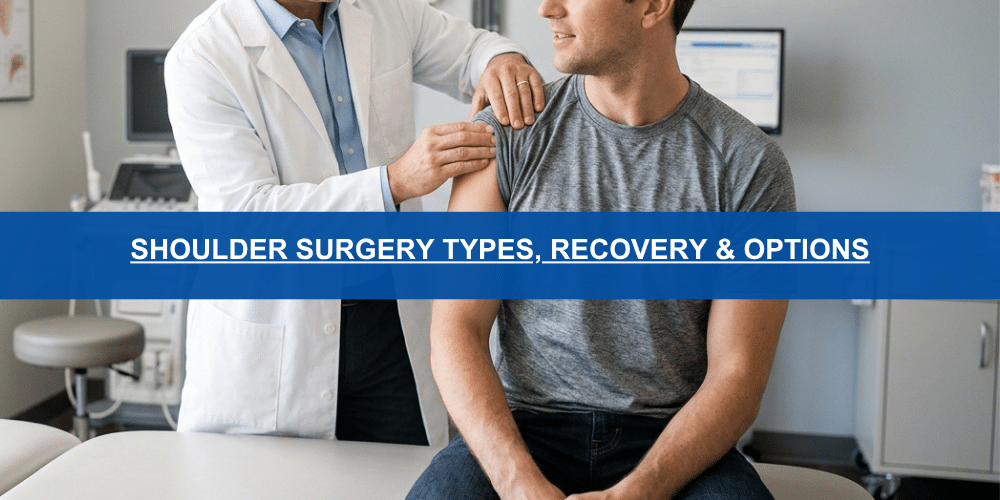
Shoulder surgery is often recommended when conservative treatments like physical therapy and medication fail to relieve shoulder pain or restore function. From rotator cuff repairs to shoulder replacements, understanding the different types of shoulder surgeries can help you make an informed decision about your treatment options. This comprehensive guide explores the most common shoulder surgeries, the conditions they treat, and what to expect during recovery.
Dr. Oladapo M. Babatunde, MD, FAAOS, Medical Director of City Orthopaedics & Sports Medicine (COSM), is a board-certified orthopedic surgeon who treats shoulder conditions at all three of the practice’s New Jersey locations: East Rutherford, West Orange, and Paramus. Recognized as a “Top Doctor” by New York Magazine and Jersey’s Best for seven consecutive years, Dr. Babatunde builds a customized treatment plan for every patient, always exploring non-surgical options first.
Types of Shoulder Surgeries
Several surgical options exist for treating different shoulder conditions. Each procedure addresses a specific issue and requires its own recovery timeline.
1. Rotator Cuff Repair
The rotator cuff is a group of muscles and tendons that stabilize the shoulder joint. Tears are common, particularly among athletes and people who perform repetitive overhead activities. Rotator cuff repair can be done using:
- Arthroscopic surgery: A minimally invasive technique in which small incisions are made to insert a camera and instruments for the repair.
- Open surgery: For larger or more complex tears, open surgery may be needed for a more extensive repair.
Recovery: Recovery generally takes several months and typically involves physical therapy to rebuild strength and flexibility. Most patients wear a sling for the first several weeks, and full tendon healing can continue for up to a year.
2. Shoulder Replacement Surgery (Arthroplasty)
Shoulder replacement surgery is often recommended for people with severe arthritis or irreparable damage to the shoulder joint. There are two main types:
- Total shoulder replacement: Both the humeral head (upper arm bone) and the socket (glenoid) are replaced with artificial components. This option works best when the rotator cuff tendons are still healthy and functional.
- Reverse shoulder replacement: This approach is used when the rotator cuff is severely damaged or irreparable. The ball and socket positions are reversed, which allows the deltoid muscle to take over much of the shoulder’s movement.
Recovery: Patients typically wear a sling for about six weeks and begin physical therapy shortly after surgery. Most see marked improvement within three to four months, though full recovery and return to more demanding activities can take six months to a year.
3. SLAP Tear Surgery
A superior labrum anterior and posterior (SLAP) tear affects the cartilage that lines the shoulder socket. Surgery involves repairing or trimming the damaged cartilage, typically through small incisions using a camera.
Recovery: Recovery usually involves about six weeks of immobilization, followed by several months of physical therapy to restore strength and motion.
4. Shoulder Stabilization Surgery
This surgery is often performed on people who experience frequent shoulder dislocations due to instability. The most common procedure is a Bankart repair, which reattaches and tightens torn ligaments in the shoulder.
Recovery: Recovery generally takes three to six months, with physical therapy playing a central role in restoring full shoulder function and preventing future dislocations.
5. Acromioclavicular (AC) Joint Repair
Injuries to the AC joint, such as a separation, can cause significant pain and instability. Surgery repairs the damaged ligaments and stabilizes the joint.
Recovery: Rehabilitation typically takes around three to six months, depending on the severity of the original injury.
Conditions That May Require Shoulder Surgery
Several conditions may lead to the need for shoulder surgery, including:
- Rotator cuff tears
- Shoulder arthritis
- Labral tears (including SLAP tears)
- Shoulder instability and frequent dislocations
- Fractures
- Severe, treatment-resistant frozen shoulder
“Surgery is never the automatic recommendation. We exhaust conservative options first, and when surgery is the right path, we build a plan around each patient’s specific tear, activity level, and goals,” says Dr. Oladapo Babatunde.
When Is Shoulder Surgery the Right Choice?
Dr. Babatunde typically recommends surgery only after conservative treatment has been given a genuine chance to work, or when the injury itself is severe enough to require repair. Surgery may be the right option when:
- Physical therapy and medication have not relieved pain after several months.
- Imaging confirms a full-thickness or large rotator cuff tear.
- The shoulder dislocates repeatedly or feels chronically unstable.
- Arthritis has caused significant cartilage loss and limits daily function.
- A fracture or labral tear is structurally unlikely to heal without repair.
The Recovery Process for Shoulder Surgery
Recovery times and rehabilitation plans vary depending on the type of surgery performed. Generally, recovery follows this pattern:
- Immobilization: Most shoulder surgeries require the arm to be kept in a sling for several weeks after surgery to protect the repair.
- Physical therapy: Physical therapy is essential for regaining strength and range of motion. The intensity and length of therapy depend on the specific procedure.
- Pain management: Managing pain is a key part of early recovery. Dr. Babatunde may prescribe medication to keep patients comfortable during the initial healing phase.
- Return to activity: Depending on the surgery, patients may resume light activity within a few weeks. However, full recovery and return to high-impact activities, such as sports, can take six months to a year.
Recovery Timeline at a Glance
Weeks 0-6
- Sling use to protect the repair or implant.
- Gentle passive motion exercises begin under supervision.
- Pain is managed with medication and ice.
Weeks 6-12
- Physical therapy advances to active-assisted range of motion.
- Sling use is gradually reduced as healing allows.
- Most patients resume light daily tasks and desk work.
Months 3-6
- Strengthening exercises are introduced as tissue healing permits.
- Noticeable improvement in pain relief and function typically occurs by this point.
- Patients may be cleared for recreational activities like golf or swimming.
Months 6-12
- Return to sports and higher-impact activity, with clearance from Dr. Babatunde.
- Full strength and motion continue to improve, sometimes for up to a year.
- Follow-up visits confirm healing and long-term function.
Read our Article on What to Do If Your Surgery is Delayed.
Get Expert Shoulder Surgery Care in Bergen and Essex County, NJ
Shoulder surgery can dramatically improve quality of life for those living with chronic shoulder pain or injury. Whether it involves repairing a torn rotator cuff or replacing an arthritic joint, understanding your surgical options is the first step toward a successful outcome. Dr. Oladapo Babatunde and the team at City Orthopaedics & Sports Medicine build a customized treatment plan for every patient, guiding you from diagnosis through full rehabilitation. No referral is required, and most major insurance plans are accepted. COSM serves patients across Bergen and Essex County at its East Rutherford, West Orange, and Paramus locations.
Schedule your shoulder consultation today and take the first step toward lasting relief.
Frequently Asked Questions
How do I know if I need shoulder surgery?
Surgery is typically recommended when physical therapy, medication, and other conservative treatments fail to relieve pain or restore function after several months, or when imaging shows a structural injury unlikely to heal on its own, such as a full-thickness rotator cuff tear.
What is the difference between total and reverse shoulder replacement?
Total shoulder replacement follows the shoulder’s natural ball-and-socket anatomy and works best when the rotator cuff is healthy. Reverse shoulder replacement switches the position of the ball and socket, allowing the deltoid muscle to compensate when the rotator cuff is too damaged to function.
How long is recovery after rotator cuff repair?
Most patients wear a sling for several weeks and start physical therapy shortly after surgery. Noticeable improvement often occurs within three to four months, though full tendon healing and return to high-impact activity can take up to a year.
Is shoulder surgery always the first recommendation for shoulder pain?
No. Dr. Babatunde follows a conservative-first approach, meaning most patients try physical therapy, activity modification, and medication before surgery is ever considered. Surgery is reserved for cases where these options do not resolve the problem or the injury requires structural repair.
Where can I get shoulder surgery in New Jersey?
City Orthopaedics & Sports Medicine offers shoulder surgery and non-surgical treatment at its East Rutherford, West Orange, and Paramus, NJ locations. Book a consultation with Dr. Babatunde to discuss your options.