

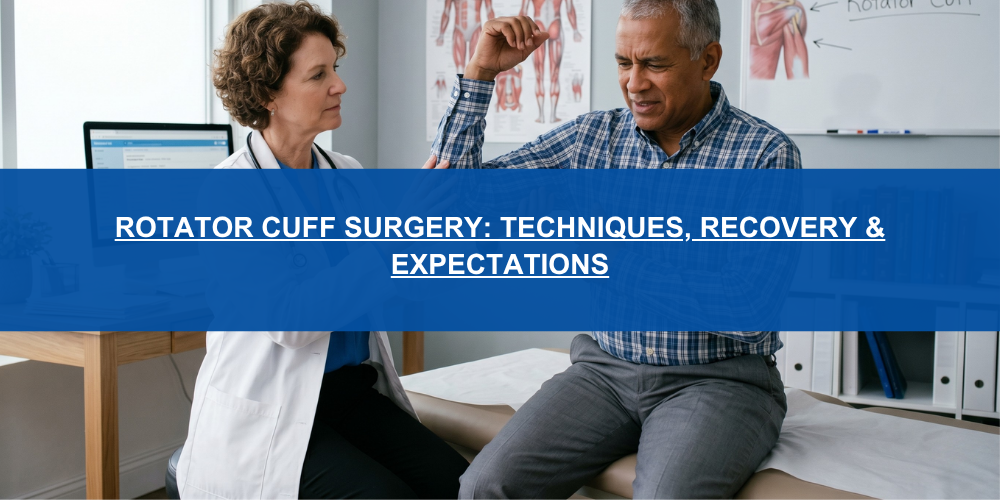
Rotator cuff surgery is one of the most common orthopedic procedures performed in the United States and one of the most misunderstood. Patients come in with questions about whether they really need it, which technique is best, how long recovery takes, and whether they will ever get their shoulder back to full strength. These are the right questions. And they deserve clear, honest answers.
At City Orthopaedics Sports Medicine, Dr. Oladapo M. Babatunde, MD, FAAOS guides patients through every stage of the rotator cuff surgery journey, from diagnosis and technique selection to structured recovery and return to full activity, across offices in East Rutherford, Paramus and West Orange, NJ.
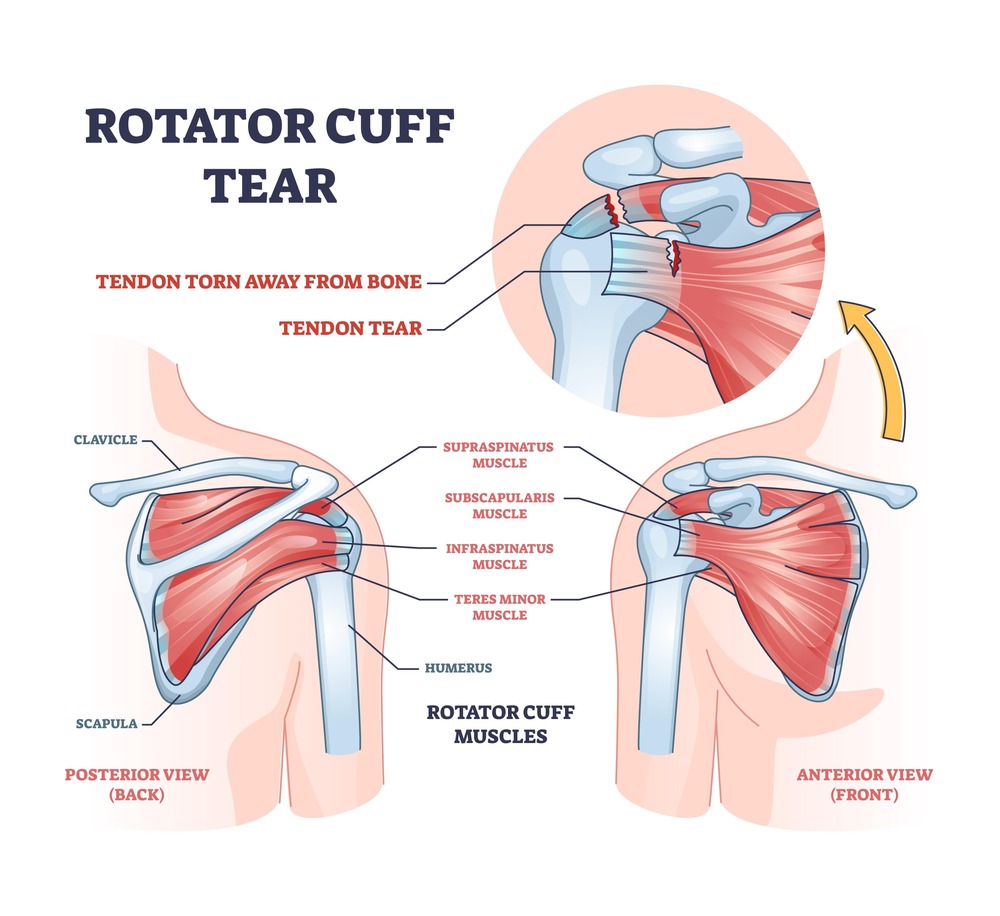
What Is a Rotator Cuff Tear and When Does It Need Surgery?
The rotator cuff is a group of four muscles and their tendons, the supraspinatus, infraspinatus, teres minor, and subscapularis, that surround and stabilize the shoulder joint. Together, they allow you to lift, rotate, and reach with your arm. When one or more of these tendons is torn, the shoulder loses strength, stability, and range of motion in ways that range from mildly inconvenient to completely disabling.
Rotator cuff tears fall into two main categories:
- Partial tears: The tendon is damaged but not fully severed. Often managed non-surgically.
- Full-thickness tears: The tendon is completely torn through. More likely to require surgical repair, especially in active patients.
Tear size matters significantly for treatment planning:
- Small tears (under 1 cm): Often respond well to conservative care. Surgical candidates are those with ongoing pain or functional limitation.
- Large tears (1 to 3 cm): Frequently require surgical repair for meaningful recovery of strength and function.
- Massive tears (over 3 cm or involving multiple tendons): Complex surgical cases with longer recovery and sometimes requiring advanced reconstruction techniques.
Do You Actually Need Rotator Cuff Surgery?
The answer depends on the size and type of Rotator Cuff injury, your age, activity level, functional demands, and how the shoulder has responded to conservative treatment. Surgery is not the automatic answer for every rotator cuff tear, but it is the right answer for many patients when specific criteria are met.
Dr. Babatunde recommends surgical evaluation when:
- A full-thickness rotator cuff tear is confirmed on MRI in an active patient under 65
- Conservative treatment including physical therapy, injections, and activity modification has been consistently applied for 3 to 6 months without adequate pain relief or functional improvement
- The patient cannot perform overhead activity, lift the arm against gravity, or complete work and athletic demands
- The tear is large or growing, as delayed repair in these cases significantly reduces the likelihood of successful fixation
- A sudden, acute tear occurred in a previously healthy shoulder
“The timing of rotator cuff surgery matters more than most patients realize,” says Dr. Babatunde.
“A large tear left unrepaired for too long can retract and develop fatty infiltration in the muscle. At that point, even a technically perfect surgery cannot fully restore function. Patients who meet surgical criteria should not wait.”
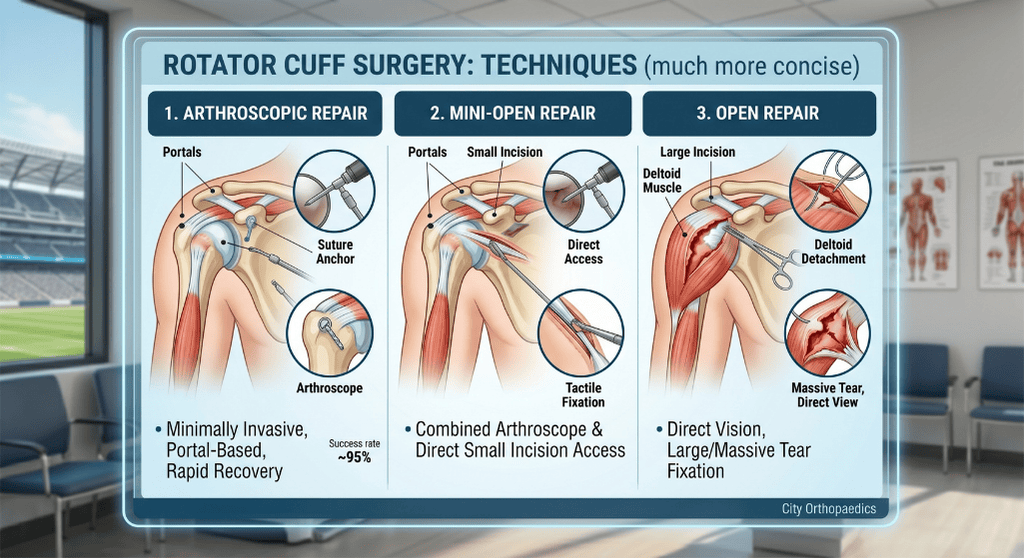
Rotator Cuff Surgery Techniques
There is no single rotator cuff surgery. The right technique depends on tear size, tear location, tissue quality, and patient-specific anatomy. The three main approaches are:
Arthroscopic Rotator Cuff Repair
Arthroscopic repair is the gold standard for most rotator cuff tears today. The surgeon makes 2 to 3 small incisions and uses a tiny camera and specialized instruments to reattach the torn tendon to the bone using suture anchors, all without opening the shoulder.
Key advantages include:
- Significantly less post-operative pain compared to open surgery
- Lower infection risk and minimal scarring
- Faster early recovery and return to daily activities
- Ability to simultaneously address other shoulder pathology such as biceps tendon issues, labral damage, or impingement in the same procedure
Single-tendon arthroscopic repair carries a success rate of approximately 95%. Two-tendon repairs achieve success rates above 70%.
Mini-Open Repair
Mini-open repair combines arthroscopic visualization with a small direct incision of 3 to 5 cm to access and repair the tendon. It is typically used for larger or more complex tears where direct tendon-to-bone fixation requires more tactile access than a purely arthroscopic approach allows. Outcomes are comparable to full arthroscopy in experienced hands.
Open Rotator Cuff Repair
Traditional open repair involves a larger incision and detachment of the deltoid muscle to directly access the rotator cuff. It has largely been replaced by arthroscopic and mini-open techniques for routine tears, but remains the appropriate approach for massive, complex, or previously failed repairs, or cases requiring tendon transfer procedures.
What Dr. Babatunde Considers When Selecting a Technique
- Tear size, pattern, and number of tendons involved
- Tissue quality and degree of tendon retraction
- Patient age, bone density, and healing capacity
- Presence of related pathology including biceps, labrum, or AC joint involvement
- Prior shoulder surgeries or injections that may affect tissue integrity
What Happens on Surgery Day
Understanding the surgical day experience reduces anxiety and improves preparation. Here is what to expect:
- Anesthesia: Most rotator cuff repairs are performed under general anesthesia combined with a regional nerve block (interscalene block) for post-operative pain control. The nerve block provides 12 to 18 hours of numbness, so patients often feel minimal pain on the day of surgery.
- Procedure duration: Arthroscopic repair typically takes 1 to 2 hours depending on tear complexity. Open procedures may run slightly longer.
- Same-day discharge: Most rotator cuff surgeries are outpatient procedures. Patients go home the same day.
- Sling application: The arm is placed in a sling immediately post-surgery and will remain there for 4 to 6 weeks to protect the repair while initial healing occurs.
Rotator Cuff Surgery Recovery: A Phase-by-Phase Timeline
Recovery from rotator cuff surgery is a carefully staged process that cannot be safely rushed. The tendon reattaches to bone over 6 to 8 weeks, but full tissue maturation and strength recovery takes considerably longer.
Phase 1: Protection and Healing (Weeks 0 to 6)
- Arm kept in a sling at all times, including during sleep
- Physical therapy begins with passive range of motion only. The therapist moves the arm; the patient does not actively contract the shoulder.
- Ice, elevation, and prescribed medication manage pain and swelling
- No lifting, reaching, or weight-bearing through the surgical arm
- Elbow, wrist, and hand exercises are encouraged to prevent stiffness downstream
Phase 2: Active-Assist Range of Motion (Weeks 6 to 10)
- Sling is progressively weaned based on surgeon clearance
- Active-assist ROM begins. The patient helps move the arm with support from the opposite hand or a pulley.
- Pendulum exercises and gentle stretching are introduced
- Light daily activities resume including personal hygiene, typing, and walking
- Strengthening exercises are not yet appropriate, as tendon-to-bone healing is still consolidating
Phase 3: Active Strengthening (Weeks 10 to 16)
- Full active shoulder motion resumes as tolerated
- Rotator cuff strengthening begins, initially with resistance bands, progressing to light weights
- Scapular stabilization exercises address the often-neglected foundation of shoulder mechanics
- Functional movements including reaching overhead, pushing, and pulling are progressively reintroduced
- No lifting above 10 pounds until surgeon clearance
Phase 4: Progressive Loading and Return to Activity (Months 4 to 6 and Beyond)
- Strength training progresses in load and complexity
- Sport-specific or work-specific movement patterns are reintroduced under guidance
- Approximately 30% of patients achieve functional recovery within 3 months, 40% between 3 and 6 months, and 30% take longer than 6 months
- Athletes typically return to sport between 9 and 12 months post-surgery
- Full recovery including complete strength restoration may take up to 12 to 14 months in some patients
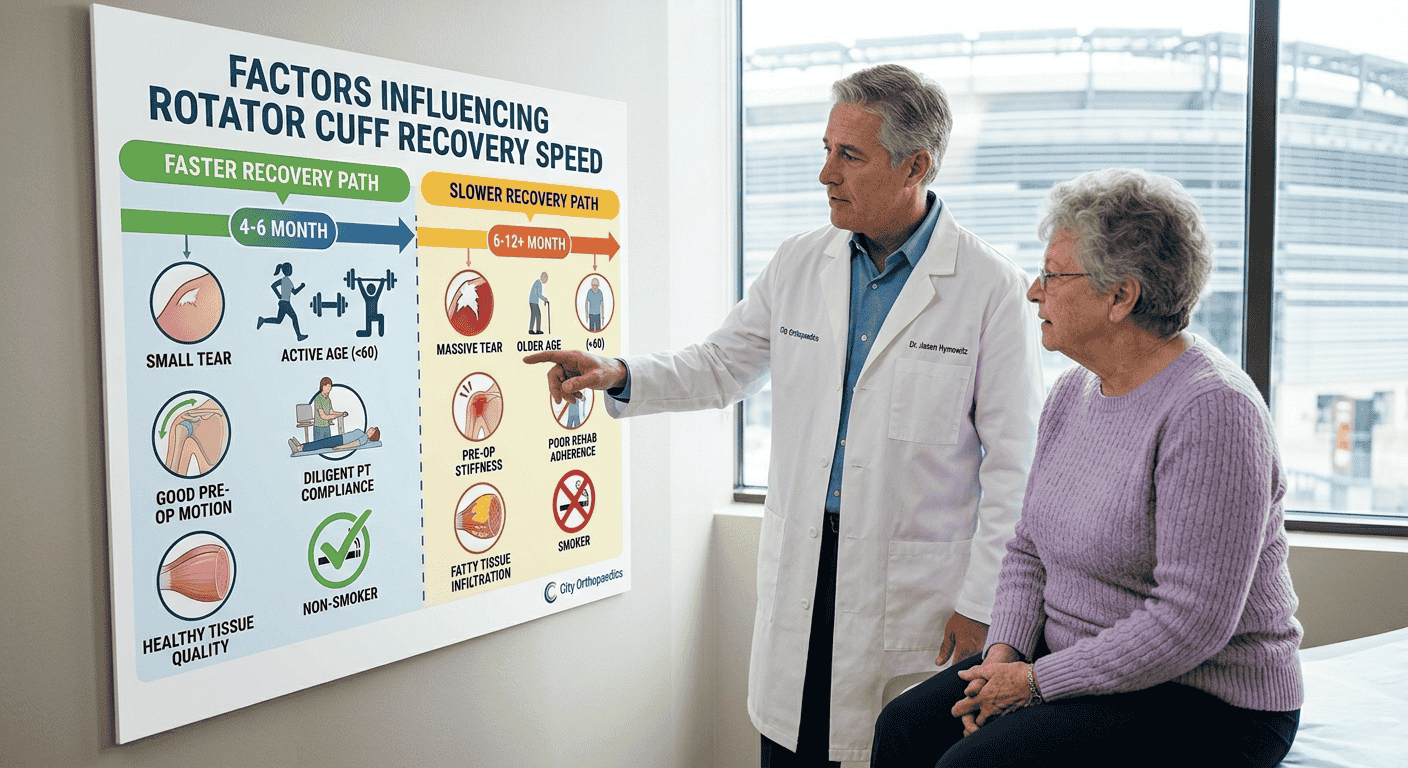
Factors That Influence How Fast You Recover
Two patients with the same surgery can have very different timelines. Here is what actually drives recovery speed:
- Tear size: Small tears typically recover in 4 months. Large tears in 6 months. Massive tears in 6 to 12 months.
- Age: Patients under 59 with smaller tears and no pre-existing stiffness tend to achieve functional recovery within 6 months.
- Pre-operative shoulder stiffness: Existing stiffness before surgery consistently predicts slower range of motion restoration after surgery.
- Adherence to rehabilitation: Compliance with PT protocols is the single most controllable predictor of outcome. Patients who skip or shorten their rehab routinely underperform their potential.
- Tissue quality: Fatty infiltration of the rotator cuff muscle from a long-standing tear slows healing regardless of surgical technique.
- Smoking: Significantly impairs tendon-to-bone healing and is strongly discouraged throughout the entire recovery period.
Preparing for Rotator Cuff Surgery: What to Do Before Day One
Preparation directly affects outcomes. City Orthopaedics provides full pre-surgical guidance, but key steps include:
- Complete all required pre-operative medical clearances including bloodwork, cardiac evaluation if needed, and anesthesia consult
- Arrange for a responsible adult to drive you home and stay with you for the first 24 to 48 hours post-surgery
- Set up your recovery space at home with a recliner or elevated sleeping surface, ice packs, a pre-tied sling, and easy-access clothing such as button-down shirts and loose tops
- Prepare meals in advance, as cooking with one arm is challenging in the first two weeks
- Complete any pre-operative physical therapy recommended by Dr. Babatunde. Stronger pre-surgical shoulder mechanics improve post-surgical starting points.
- Stop NSAIDs, blood thinners, and specified supplements per your surgeon’s timeline
Warning Signs to Watch for During Recovery
Most patients achieve excellent outcomes, but it is important to recognize signs that warrant early contact with your surgeon:
- Increasing rather than decreasing pain beyond 1 to 2 weeks post-surgery
- Signs of infection: redness spreading from the incision, warmth, fever, or discharge
- Sudden loss of motion after a period of improvement, which may indicate a re-tear
- Significant swelling, redness, or pain in the arm or leg, which may indicate a blood clot
- Numbness or tingling beyond the expected nerve block period
City Orthopaedics patients have direct access to the clinical team throughout recovery. Questions and concerns never have to wait for the next scheduled appointment.
Expert Shoulder Surgery Care in NJ and NY
Dr. Oladapo M. Babatunde, MD, FAAOS is a fellowship-trained, board-certified orthopedic surgeon with extensive expertise in shoulder surgery and sports medicine. Patients across New Jersey and New York consistently describe his care as thorough, communicative, and genuinely personalized. He is a surgeon who explains every step, answers every question, and stays invested from first consultation through final clearance.
Whether you have just received a rotator cuff diagnosis or have been managing shoulder pain for months wondering if surgery is the right next step, a consultation with Dr. Babatunde gives you the clarity needed to make a confident, informed decision.
Do not let a torn rotator cuff dictate the limits of your shoulder. Make rotator cuff surgery a decision you understand fully and recover from completely. Book your shoulder consultation at City Orthopaedics Sports Medicine today.
Frequently Asked Questions About Rotator Cuff Surgery
How long does it take to recover from rotator cuff surgery?
Recovery depends on tear size and patient factors. Small tears typically require about 4 months. Large tears require around 6 months. Massive tears take between 6 and 12 months. Most patients regain meaningful functional strength within 4 to 6 months, but full recovery including complete strength restoration can take up to 12 to 14 months. Adherence to physical therapy is the single biggest driver of how quickly you recover.
Is arthroscopic rotator cuff surgery better than open surgery?
For most patients, arthroscopic repair is the preferred technique. It offers less post-operative pain, lower infection risk, faster early recovery, and smaller incisions compared to open surgery. Open or mini-open techniques remain appropriate for larger, more complex, or previously repaired tears. Dr. Babatunde selects the technique based on your specific tear characteristics, not preference alone.
Can a rotator cuff tear heal without surgery?
Partial tears and small full-thickness tears in low-demand patients can often be managed successfully with physical therapy, injections, and activity modification. However, large full-thickness tears in active patients rarely heal on their own and tend to enlarge over time. Delayed repair in these cases reduces the likelihood of a successful surgical outcome. Early evaluation is critical to understanding your specific options.
Will I need physical therapy after rotator cuff surgery?
Yes, without exception. Physical therapy is the foundation of rotator cuff surgery recovery. It begins within days of surgery with passive motion and progresses through active motion, strengthening, and functional retraining over 4 to 6 months. Patients who skip or shorten their rehab consistently achieve inferior outcomes compared to those who complete the full protocol.
When can I return to sports after rotator cuff surgery?
Most athletes return to sport between 9 and 12 months post-surgery, depending on the type of sport, tear severity, and tissue healing quality. Return-to-sport clearance at City Orthopaedics is milestone-based, not purely time-based. Strength, stability, and movement quality are tested before any sport-specific loading is approved.
Where can I get rotator cuff surgery evaluated in New Jersey or New York?
City Orthopaedics Sports Medicine offers comprehensive shoulder surgery evaluation and care at offices in East Rutherford, Paramus, and West Orange, NJ. Dr. Oladapo M. Babatunde, MD, FAAOS, leads shoulder and sports medicine care across all locations. Book your appointment here.