


Bunions are one of the most common foot conditions affecting adults, especially women. While some bunions are mild and manageable, others progress over time and lead to significant discomfort, difficulty walking, and limitations in daily activity. When symptoms interfere with quality of life, bunion correction surgery becomes an effective and long-lasting solution.
What Causes a Bunion?
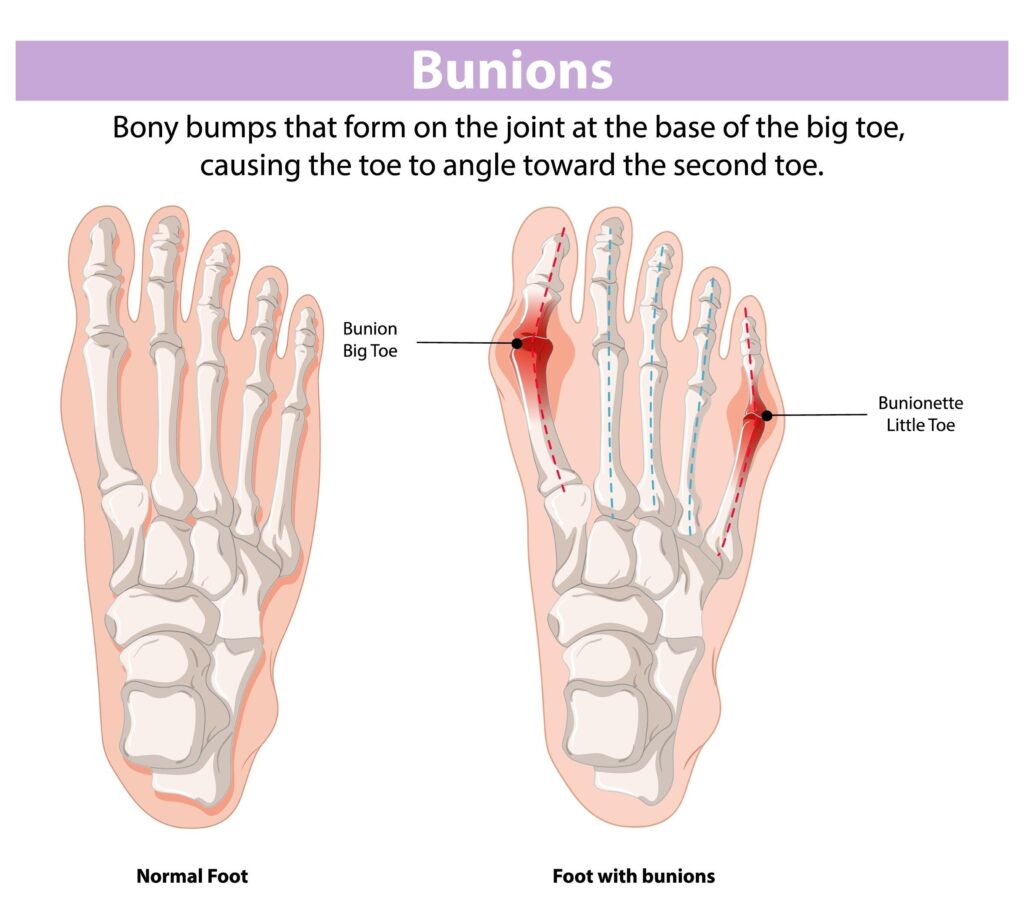
A bunion occurs when the big toe shifts toward the second toe, causing the joint at the base of the big toe to protrude outward. Factors that contribute to bunion development include:
- Genetics or inherited foot structure
- Flat feet or abnormal foot mechanics
- Improper footwear (tight or narrow shoes)
- Arthritis
- Repeated stress or pressure on the big toe
While conservative measures like shoe modification and padding may help early on, they cannot reverse the deformity.
What Is Bunion Correction Surgery?
Bunion correction—also known as hallux valgus reconstruction—is a surgical procedure that realigns the toe and corrects the structural deformity. The goal is to:
- Restore proper alignment
- Reduce pain and inflammation
- Improve mobility and function
- Prevent further progression
Modern techniques allow for less invasive approaches, smaller incisions, and quicker recovery compared to older methods.
Types of Bunion Correction Procedures
Depending on the severity of the bunion, the surgeon may use one or more of the following techniques:
1. Minimally Invasive Bunion Correction
- Small incisions
- Less disruption to soft tissue
- Reduced pain and swelling
- Faster return to activity
2. Osteotomy
The bone is cut and repositioned to restore alignment.
3. Soft Tissue Realignment
Tight ligaments are released, and loose ones are tightened to balance the joint.
4. Fusion Procedures
In severe or arthritic bunions, fusing the joint improves long-term stability.
Who Is a Good Candidate for Surgery?
You may benefit from bunion correction if you experience:
- Daily foot pain that limits activity
- Difficulty finding shoes that fit comfortably
- Persistent swelling or inflammation
- Worsening deformity
- Little relief from non-surgical care
What to Expect After Surgery
Recovery varies depending on the procedure but may include:
- A protective surgical shoe
- Limited weight-bearing initially
- Return to regular shoes within weeks
- Physical therapy to restore flexibility and strength
Most patients experience significant pain relief and improved foot function, allowing them to return to normal activities with more comfort.
Why Choose City Orthopaedics & Sports Medicine for Bunion Correction Surgery?
Your feet carry your entire body weight. You don’t want to trust them to just anyone. Our team utilizes the latest evidence-based techniques to ensure your Bunion Correction Surgery is successful and your recovery is smooth.
We look at the whole picture—your lifestyle, your goals, and your anatomy—to create a custom treatment plan. Whether you are a high-performance athlete or just want to walk the dog without wincing, we are here to help.
Frequently Asked Questions (FAQs)
1. Can bunions go away without surgery?
No. While pads and wider shoes can manage pain, they cannot reverse the structural deformity of a bunion. Surgery is the only way to realign the bone.
2. How painful is bunion surgery?
Modern minimally invasive techniques have significantly reduced post-operative pain. Most patients manage discomfort well with prescribed medication and rest.
3. How long does it take to recover from bunion surgery?
Recovery timelines vary, but many patients transition back to regular shoes within a few weeks. Full recovery for high-impact activities may take a few months.
4. Will the bunion come back after surgery?
Recurrence is possible but rare with modern surgical techniques. Wearing proper footwear and following post-op care instructions significantly lowers this risk.
5. Can I walk immediately after surgery?
It depends on the procedure. Many modern procedures allow for immediate weight-bearing in a protective boot, while others may require a short period of keeping weight off the foot.