


A hip labral tear is one of the most commonly missed diagnoses in orthopedic medicine. Patients often spend months or even years dealing with groin pain, clicking, or a deep hip ache before the real cause is identified. If conservative care has not resolved your hip symptoms, or if you have been told your X-rays look normal but the pain persists, a labral tear may be exactly what is going on.
At City Orthopaedics Sports Medicine, Dr. Oladapo M. Babatunde, MD, FAAOS provides expert hip labral tear diagnosis and treatment across offices in East Rutherford, Paramus, West Orange, NJ, and Manhattan, NY. This guide covers everything you need to know, from understanding what the labrum does to recognizing symptoms and exploring every treatment option available.
What Is the Hip Labrum and Why Does It Matter?
The hip labrum is a ring of tough, fibrous cartilage that lines the rim of the hip socket (acetabulum). Think of it as a gasket that deepens the socket, seals the joint, and holds the femoral head (ball) firmly in place during movement. It serves several critical functions that are easy to overlook until they are lost.
Specifically, the labrum does the following:
- Deepens the hip socket by up to 22%, significantly increasing joint stability during dynamic movement
- Creates a suction seal that distributes fluid evenly across the joint surface, reducing friction and protecting the articular cartilage
- Acts as a shock absorber during weight-bearing activities, shielding the underlying cartilage from concentrated peak loads
- Provides sensory feedback to the nervous system about joint position, supporting balance and coordination during complex movements
When the labrum tears, that seal is broken. The result is not just pain. Over time, a torn labrum accelerates cartilage wear inside the joint, which is why early diagnosis and appropriate treatment genuinely matter for long-term hip health.
What Causes a Hip Labral Tear?
Hip labral tears develop from several different mechanisms. Understanding the cause helps determine the most effective treatment approach and reduces the risk of recurrence after repair.
Femoroacetabular Impingement (FAI)
FAI is the most common underlying cause of hip labral tears. It occurs when the ball and socket of the hip joint make abnormal contact during movement because of a bony prominence on the femoral head (cam impingement), a rim overgrowth on the socket (pincer impingement), or a combination of both. That repeated abnormal contact gradually damages the labral tissue along the rim. In fact, the majority of patients diagnosed with a hip labral tear have some degree of underlying FAI driving the problem.
Acute Trauma
A sudden, forceful movement such as a hip dislocation, a heavy fall, or a direct impact to the hip can tear the labrum acutely. Traumatic labral tears are less common than FAI-related tears but tend to produce more immediate and intense symptoms.
Hip Dysplasia
Hip dysplasia is a condition where the hip socket is too shallow to fully cover the femoral head. As a result, the labrum bears an abnormally high proportion of the joint’s load during everyday movement. Over time, this excess loading tears and degrades the labral tissue. Labral tears from dysplasia require a different surgical strategy than FAI-related tears because the underlying socket geometry must also be addressed.
Repetitive Overuse
Athletes and active individuals who perform repetitive hip rotation, deep flexion, or pivoting movements can develop labral tears through cumulative microtrauma. Ballet dancers, hockey players, soccer players, runners, and martial artists are among the most commonly affected groups.
Degeneration
In older patients, the labrum can degenerate and tear gradually as part of the broader process of hip joint aging, particularly when early osteoarthritis is also present. Degenerative labral tears typically respond differently to surgical treatment than acute or FAI-related tears.

Hip Labral Tear Symptoms: What You Will Feel
Recognizing hip labral tear symptoms early leads to faster, more accurate diagnosis and better outcomes. The symptom pattern is often described as subtle and confusing, which is part of why it gets missed. The most common signs include the following:
- Deep groin pain: Pain felt deep in the front of the hip or groin is the most consistent symptom of a hip labral tear. It is often described as a dull ache at rest that becomes sharper with activity. Many patients initially assume it is a muscle strain.
- Pain with hip flexion and internal rotation: Activities that bring the knee toward the chest and rotate the hip inward, such as getting in and out of a car, squatting, sitting for long periods, or pivoting during sport, reliably provoke labral tear pain.
- Clicking, catching, or locking: A torn labral fragment can catch inside the joint and produce a noticeable click, pop, or catching sensation with certain hip movements. Some patients feel a locking sensation where the hip briefly gets stuck.
- Hip stiffness: Reduced range of motion, particularly with internal rotation and hip flexion, is common and often progresses gradually over months.
- Pain after prolonged sitting: Many patients with labral tears notice that the hip feels stiff and uncomfortable after sitting at a desk or in a car for an extended period, then loosens up briefly after standing.
- Giving way: Some patients experience a sensation that the hip is unstable or about to give out, particularly during single-leg loading or rapid direction changes.
“The tricky thing about labral tears is that they mimic a lot of other hip conditions,”
says Dr. Babatunde.
“Groin pulls, hip flexor strains, and early arthritis can all feel similar. The key is a thorough clinical exam combined with the right imaging. When we put those two together, the diagnosis becomes clear and the treatment plan follows directly.”
How a Hip Labral Tear Is Diagnosed
Accurate diagnosis is the foundation of every effective treatment plan. At City Orthopaedics, Dr. Babatunde follows a structured, thorough diagnostic process.
Clinical Examination
Dr. Babatunde begins with a detailed history of symptoms, activity level, and onset pattern. He then performs a targeted physical exam that includes specific provocative tests for labral pathology. The FADIR test (Flexion, Adduction, Internal Rotation) is the most sensitive clinical screen for a hip labral tear. A positive result, meaning reproduction of the patient’s familiar groin pain during this maneuver, strongly suggests labral involvement. Additional tests for hip impingement and instability complete the clinical picture.
Imaging
- X-rays: Dr. Babatunde orders weight-bearing X-rays of both hips to assess joint space, identify cam or pincer bony prominences consistent with FAI, evaluate for hip dysplasia, and rule out arthritis. X-rays do not show the labrum directly but are critical for understanding the structural context around the tear.
- MRI with arthrogram: A standard MRI can miss smaller labral tears. An MRI arthrogram, where a contrast dye is injected into the hip joint before imaging, is the gold standard for diagnosing labral tears. It reveals the size and location of the tear, the condition of the surrounding articular cartilage, and the degree of any related chondral damage with significantly higher accuracy than standard MRI alone.
Hip Labral Tear Treatment Options
Not every hip labral tear requires surgery. The right treatment depends on tear severity, the presence of an underlying structural cause, symptom duration, patient age, and activity demands. Dr. Babatunde evaluates all of these factors before making any recommendation.
Conservative Treatment
Conservative management is the appropriate first step for many patients, particularly those with mild to moderate symptoms, a short symptom duration, or no significant underlying structural abnormality driving the tear. Non-surgical options include the following:
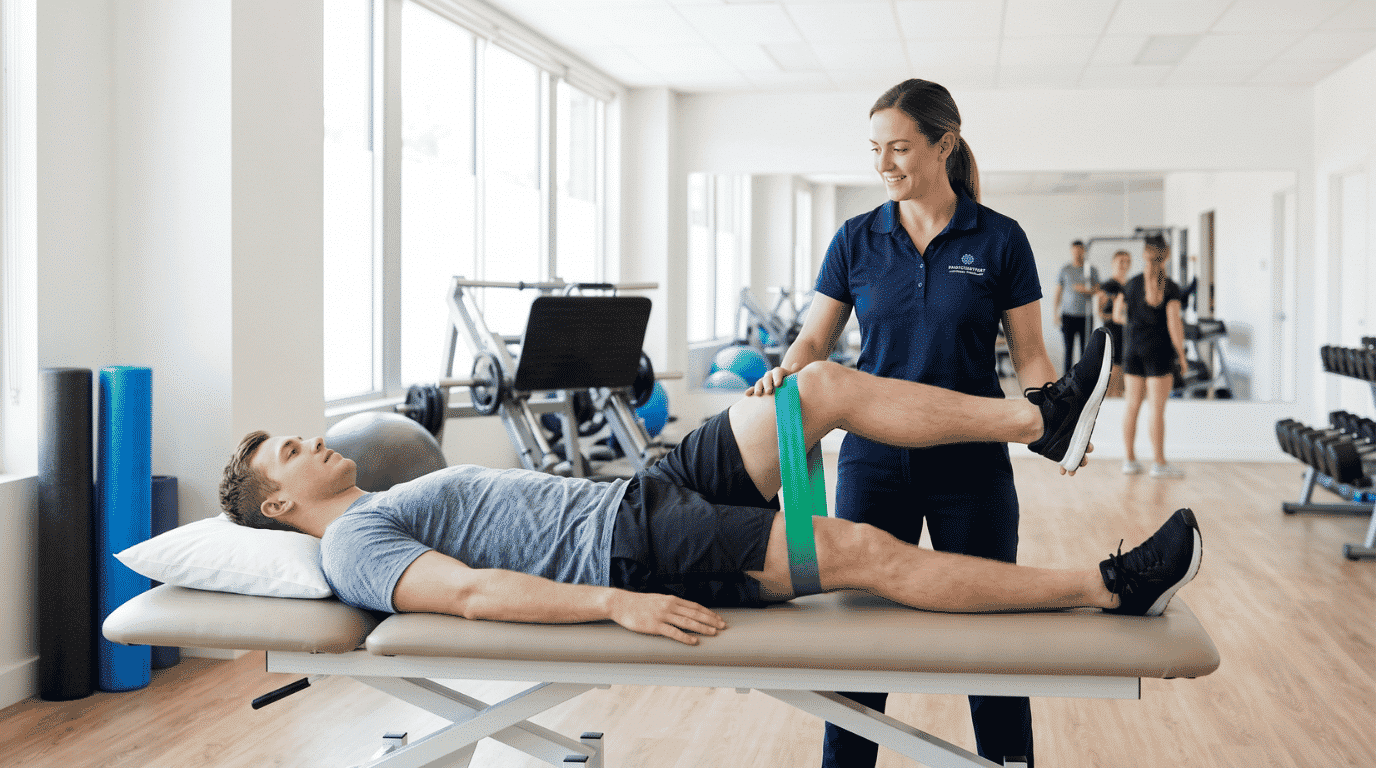
- Physical therapy: A targeted program focused on hip external rotator and abductor strengthening reduces the mechanical load on the labrum during activity. Core and pelvis stability training also plays a major role in offloading the hip joint. This is the most important non-surgical intervention available.
- Activity modification: Temporarily avoiding the specific movements that consistently provoke symptoms, particularly deep flexion, internal rotation, and high-impact pivoting, allows the acute inflammation around the tear to settle.
- Anti-inflammatory medication: Short-term NSAID use helps manage pain and swelling during flare-ups. However, it does not treat the tear itself and is not a long-term standalone strategy.
- Corticosteroid injection: An ultrasound or fluoroscopy-guided cortisone injection into the hip joint can provide meaningful pain relief for weeks to months. It is particularly useful as a diagnostic tool as well: if the injection provides significant temporary relief, it confirms that the hip joint itself is the pain source and supports the labral tear diagnosis.
- PRP therapy: Platelet-Rich Plasma uses growth factors from the patient’s own blood to support tissue healing and reduce inflammation. It is increasingly used for partial labral tears and early cartilage changes in patients seeking to delay or avoid surgery.
However, it is important to be honest about the limits of conservative care. If an underlying structural cause such as FAI or dysplasia is driving the tear, that mechanical problem does not resolve with therapy alone. Without addressing the root cause, symptoms typically return even after a period of improvement, and the cartilage continues to wear. In these cases, surgery is the more appropriate long-term solution.
Hip Arthroscopy: Surgical Treatment for a Hip Labral Tear
Hip arthroscopy is the minimally invasive surgical procedure used to treat hip labral tears and address the underlying structural causes of impingement in the same procedure. It has transformed the management of hip labral pathology over the last two decades and is now the standard of care for symptomatic tears that have not responded to conservative management.
What Happens During Hip Arthroscopy
Dr. Babatunde performs hip arthroscopy through 2 to 3 small portal incisions around the hip. A small camera (arthroscope) is inserted through one portal, and specialized instruments are introduced through the others. The entire joint is visualized on a high-definition monitor, allowing Dr. Babatunde to assess the labrum, cartilage, and bony anatomy with precision that is simply not possible through any external examination or imaging study.
Depending on findings, the procedure typically includes one or more of the following:
- Labral repair: The torn labral tissue is reattached to the rim of the socket using small suture anchors. Repair is preferred over removal whenever the tissue quality is sufficient because it restores the labrum’s function and protects long-term joint health.
- Labral reconstruction: In cases where the labral tissue is too damaged or deficient to repair, a graft is used to reconstruct the labrum. This is a more complex procedure but produces reliable results in appropriate candidates.
- Cam resection (femoroplasty): If a cam-type FAI bony prominence is present on the femoral head, Dr. Babatunde reshapes the bone to eliminate the impingement and remove the source of ongoing labral damage.
- Pincer resection: If a pincer-type FAI overgrowth is present on the acetabular rim, the excess bone is removed to restore normal clearance between the ball and socket during hip motion.
- Cartilage treatment: Areas of articular cartilage damage identified during arthroscopy can be addressed with microfracture, abrasion chondroplasty, or cartilage implantation techniques depending on the size and depth of the lesion.
Advantages of Hip Arthroscopy
- Performed through tiny incisions with no large open wound
- Outpatient procedure in most cases. Patients go home the same day.
- Lower infection risk and minimal visible scarring compared to open hip surgery
- Simultaneous treatment of the labrum and underlying structural cause in a single procedure
- Preservation of the natural hip joint, delaying or preventing the need for hip replacement
Hip Labral Tear Surgery Recovery: What to Expect
Recovery from labral tear surgery via hip arthroscopy is a staged, progressive process. The labrum heals over time, and loading must be carefully managed to protect the repair during that healing window.
Weeks 0 to 2: Protection Phase
- Crutches are used for protected partial weight-bearing to offload the repaired labrum
- A continuous passive motion (CPM) device may be used to gently maintain range of motion
- Physical therapy begins immediately with passive range of motion and muscle activation exercises
- Hip precautions are strictly followed to avoid positions that stress the repair
Weeks 2 to 6: Progressive Loading
- Weight-bearing progresses toward full weight-bearing as comfort and healing allow
- Active range of motion exercises begin and gradually expand in depth and direction
- Aquatic therapy is often introduced during this phase for low-impact progressive loading
- Crutches are weaned based on individual progress and surgeon clearance
Weeks 6 to 16: Strength and Stability Training
- Hip abductor, external rotator, and core strengthening begin in earnest
- Single-leg balance and proprioception training are introduced progressively
- Stationary cycling and swimming support cardiovascular fitness without joint overload
- Running typically begins around weeks 12 to 16 based on strength criteria, not calendar time alone
Months 4 to 6 and Beyond: Return to Activity
- Sport-specific training and dynamic movement patterns are introduced under guidance
- Most patients return to recreational sport and demanding daily activity between 4 and 6 months
- High-demand athletes typically return to full competition between 6 and 9 months post-surgery
- Return-to-sport clearance at City Orthopaedics is milestone-based, not calendar-based. Strength, stability, and movement quality are all assessed before clearance is given.

Is Hip Arthroscopy Right for You?
Hip arthroscopy produces excellent results for the right patient, but not every labral tear is a surgical candidate. Generally, surgery is most appropriate when:
- Conservative treatment including physical therapy and injections has been consistently applied for at least 8 to 12 weeks without adequate improvement
- MRI arthrogram confirms a significant labral tear with or without concurrent cartilage damage
- A structural cause such as FAI or borderline dysplasia is identified that will not resolve without bony correction
- Symptoms are significantly limiting athletic performance, work function, or quality of daily life
- The patient has adequate cartilage remaining. Advanced hip arthritis significantly reduces the expected benefit of labral surgery and may point toward hip replacement as a more appropriate option instead.
For patients whose hip condition has progressed beyond what arthroscopy can address, our comprehensive guide on hip pain treatment from conservative care to hip replacement covers the full treatment spectrum including joint replacement options.
Get Expert Hip Labral Tear Care at City Orthopaedics
A hip labral tear does not have to mean months of unexplained pain or premature joint deterioration. With the right diagnosis and the right treatment plan, most patients recover fully and return to the activities they love. At City Orthopaedics Sports Medicine, every patient receives a thorough evaluation, an honest explanation of all available options, and a treatment plan built around their specific goals and lifestyle.
Dr. Oladapo M. Babatunde, MD, FAAOS brings fellowship-trained expertise and genuine patient-focused care to every hip arthroscopy case. No referral is required and most major insurance plans are accepted.
Book your hip consultation at City Orthopaedics Sports Medicine today and find out whether hip arthroscopy is the right next step for you.
Frequently Asked Questions About Hip Labral Tears
Can a hip labral tear heal on its own?
Small, partial labral tears with no underlying structural cause can sometimes settle with rest, activity modification, and physical therapy. However, complete tears and tears driven by FAI or dysplasia will not heal biologically on their own. Without addressing the underlying structural cause, symptoms typically return and cartilage damage continues to progress. If conservative care has not provided lasting improvement, a surgical evaluation is appropriate.
How is a hip labral tear different from hip arthritis?
A hip labral tear is a structural injury to the cartilage ring that lines the hip socket. Hip arthritis is the progressive loss of articular cartilage covering the joint surfaces of the ball and socket. Both conditions can cause deep hip and groin pain, but they respond to different treatments. Labral tears are often addressable with hip arthroscopy in younger patients, while advanced arthritis typically requires joint replacement. The two conditions can and do coexist, which is why thorough imaging is essential for accurate treatment planning.
What does hip labral tear pain feel like?
Most patients describe a deep ache in the groin or front of the hip that worsens with activity, particularly with hip flexion, rotation, or prolonged sitting. Some patients also notice a clicking, catching, or giving way sensation inside the joint. The pain is often subtle enough at first to be dismissed as a muscle pull, which is one reason labral tears are frequently underdiagnosed in the early stages.
How long is recovery from hip arthroscopy for a labral tear?
Most patients return to light daily activities within 4 to 6 weeks and to recreational activity between 4 and 6 months. High-demand athletes typically return to full competition between 6 and 9 months post-surgery. Recovery is milestone-based at City Orthopaedics, meaning strength and movement quality benchmarks must be met before clearance is granted, regardless of the time elapsed since surgery.
Will I need hip replacement after labral tear surgery?
Most patients who undergo appropriately timed hip arthroscopy for a labral tear do not go on to need hip replacement, at least not for many years. In fact, treating the labral tear and correcting the underlying impingement actively protects the articular cartilage and slows joint degeneration. However, patients with significant pre-existing arthritis at the time of labral tear surgery have lower expected outcomes from arthroscopy, and those patients may be better served by considering joint replacement earlier.
Where can I get hip labral tear treatment in New Jersey or New York?
City Orthopaedics Sports Medicine offers comprehensive hip labral tear evaluation, conservative care, and hip arthroscopy at offices in East Rutherford, Paramus, and West Orange, NJ, and Manhattan, NY. Dr. Oladapo M. Babatunde, MD, FAAOS, leads hip and sports medicine care across all locations. Book your appointment here.