


If you have questions about knee surgery, you’re not alone. It’s one of the most searched medical topics in the country and for good reason. A knee surgery decision can feel overwhelming, especially when you don’t know what to expect before, during, or after the procedure.
At City Orthopaedics Sports Medicine, we hear these questions every single day. That’s why Dr. Oladapo M. Babatunde, MD, FAAOS our board-certified, fellowship-trained orthopedic surgeon and knee specialist has answered the 10 most common ones here, straight and clearly.
The Top 10 Questions About Knee Surgery, Answered by Dr. Babatunde
1. Do I Actually Need Knee Surgery?
Not necessarily, and this is the first thing Dr. Babatunde addresses with every new patient. Many knee conditions respond well to non-surgical treatment: physical therapy, anti-inflammatory medications, corticosteroid or hyaluronic acid injections, and activity modification.
Surgery is typically recommended when:
- Conservative treatment has been tried and hasn’t provided enough relief
- The structural damage is too significant to heal on its own (e.g., a complete ACL tear)
- Pain or instability is significantly limiting your daily function or quality of life
“We never rush to the operating room,” says Dr. Babatunde.
“Every patient gets a thorough evaluation, and we explore all realistic options together before surgery ever comes up.”
2. What Are the Different Types of Knee Surgery?
Knee surgery isn’t one-size-fits-all. The type recommended depends entirely on your diagnosis. Common procedures include:
- ACL reconstruction — for torn anterior cruciate ligaments, common in athletes
- Meniscus repair or meniscectomy — for torn cartilage in the knee
- Knee arthroscopy — a minimally invasive procedure to diagnose and treat various joint issues
- Partial knee replacement — resurfaces only the damaged compartment of the knee
- Total knee replacement (arthroplasty) — replaces the entire knee joint, typically for advanced osteoarthritis
- Osteotomy — realigns the knee by reshaping the bone, often used in younger patients with early arthritis
3. How Long Does Knee Surgery Take?
This depends heavily on the procedure. Arthroscopic procedures like a meniscus repair typically take 30 to 60 minutes. ACL reconstruction usually runs 1 to 1.5 hours. Total knee replacement surgery generally takes 1.5 to 2.5 hours, including preparation and anesthesia time.
Dr. Babatunde will walk you through the specific timeline for your procedure during your pre-surgical consultation.
4. Will I Be Awake During Knee Surgery?
Most knee surgeries are performed under general anesthesia or regional anesthesia (a nerve block that numbs the leg). In some cases, a spinal block is used. Your anesthesiologist will discuss the safest and most appropriate option based on your health profile.
You will not feel pain during the procedure regardless of the anesthesia type chosen.
5. How Long Is Recovery After Knee Surgery?
Recovery varies significantly based on the procedure and the individual patient. General timelines look like this:
- Knee arthroscopy (minor): 1–3 weeks to return to light activity
- Meniscus repair: 3–6 months for full return to sport
- ACL reconstruction: 6–12 months to return to competitive sport
- Partial knee replacement: 6–12 weeks for most daily activities
- Total knee replacement: 3–6 months for functional recovery up to 12 months for full benefit.
Age, overall health, and commitment to physical therapy all play a major role in how quickly you recover.
Read our blog on Partial vs. Total Knee Replacement: Which One Do I Need?
6. Will I Need Physical Therapy After Knee Surgery?
Yes, almost always. Physical therapy is a critical component of every knee surgery recovery at City Orthopaedics. It restores strength, range of motion, and joint stability after the procedure. Skipping or shortening your rehab is one of the most common reasons patients don’t achieve the full benefit of their surgery.
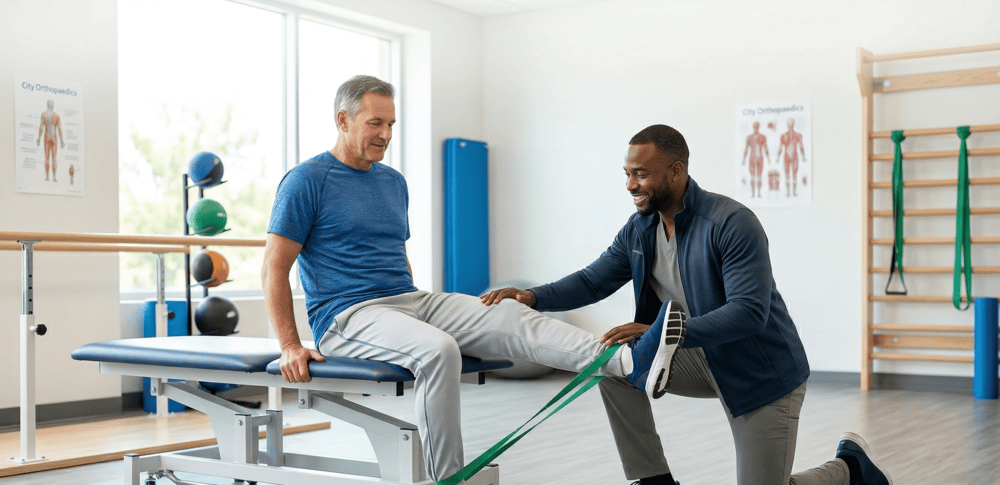
Dr. Babatunde provides detailed post-operative PT protocols and monitors each patient’s progress through the full recovery journey from the first post-op visit to return-to-activity clearance.
7. What Are the Risks of Knee Surgery?
Like all surgical procedures, knee surgery carries some risk. These include:
- Infection at the incision site or within the joint
- Blood clots (deep vein thrombosis)
- Nerve or blood vessel injury
- Stiffness or reduced range of motion
- Implant complications (in replacement surgeries)
- Anesthesia-related reactions
These risks are relatively low when surgery is performed by an experienced, board-certified surgeon. Dr. Babatunde has an extensive track record of excellent outcomes and takes time before every procedure to ensure patients understand both the risks and the expected benefits.
8. How Do I Prepare for Knee Surgery?
Preparation makes a meaningful difference in outcomes. Here’s what City Orthopaedics typically recommends:
- Complete all pre-surgical testing (bloodwork, imaging, cardiac clearance if needed)
- Stop blood thinners, NSAIDs, or supplements as directed by your surgeon
- Arrange transportation home and post-op help at home for the first 24–48 hours
- Set up your recovery space at home (accessible bed, ice packs, elevated leg rest)
- Attend your pre-op appointment and ask every question on your list
Dr. Babatunde’s team provides written pre-surgical instructions and is always available to answer questions before your procedure day.
9. When Can I Return to Sports or Normal Activity After Knee Surgery?
Return-to-activity timelines depend on the surgery and your specific sport or job demands. Most patients with desk jobs can return to work within 2–6 weeks. Athletes returning to cutting, jumping, or contact sports especially after ACL reconstruction typically require 9–12 months and must pass functional benchmarks before clearance.
Dr. Babatunde takes return-to-sport decisions seriously. Rushing back too early is one of the leading causes of re-injury, and individualized milestones are built into every patient’s recovery plan.

10. How Do I Know If I’m a Good Candidate for Knee Surgery?
The best way to find out is through a comprehensive evaluation. Good surgical candidates generally:
- Have a clearly identified structural problem on imaging (MRI, X-ray)
- Have tried conservative treatment without adequate improvement
- Are in reasonable overall health for anesthesia and healing
- Have realistic expectations about outcomes and recovery
- Are committed to rehabilitation post-operatively
Age alone is not a disqualifier. City Orthopaedics treats patients of all ages across offices in East Rutherford, Paramus, and West Orange, NJ, and every evaluation is individualized.
Get Your Knee Surgery Questions Answered in Person
Reading about knee surgery is a great first step but nothing replaces a face-to-face evaluation with an expert. Dr. Oladapo M. Babatunde, MD, FAAOS is one of New Jersey and New York’s most trusted knee surgeons, known for exceptional surgical outcomes, warm bedside manner, and genuinely personalized care.
Whether you’re exploring treatment options for an ACL tear, chronic knee pain, or osteoarthritis, the right next step is a consultation. Stop searching and start getting real answers your questions about knee surgery deserve a real expert’s response.
Book your knee consultation with Dr. Babatunde at City Orthopaedics Sports Medicine today.
Frequently Asked Questions
How do I know if I need knee surgery or just physical therapy?
If conservative treatments like physical therapy, injections, and rest haven’t resolved your pain or instability after several months, surgery may be warranted. A thorough evaluation with imaging by a knee specialist like Dr. Babatunde at City Orthopaedics will give you a clear answer based on your specific condition.
Is knee replacement the same as knee repair surgery?
No. Knee repair (like a meniscus repair or ACL reconstruction) restores or fixes your natural tissue. Knee replacement removes damaged joint surfaces and replaces them with implants. The right procedure depends entirely on your diagnosis, age, activity level, and extent of joint damage.
How painful is knee surgery recovery?
Some pain and swelling in the first days to weeks after knee surgery is normal. Your care team will provide a pain management plan including medications, icing protocols, and elevation guidelines. Most patients report manageable pain levels when they follow their recovery instructions closely.
Can I have knee surgery if I’m overweight?
Weight is a factor surgeons consider, but it doesn’t automatically disqualify someone from knee surgery. In some cases, weight loss is recommended before elective procedures to improve outcomes and reduce complication risk. Dr. Babatunde evaluates each patient individually and will discuss any weight-related considerations openly.
How long do knee replacement implants last?
Modern knee replacement implants are designed to last 15–25 years or more, depending on activity level and implant type. Younger, more active patients may eventually need a revision procedure. Advances in implant materials continue to improve longevity outcomes year over year.
Where can I see a knee surgeon in New Jersey or New York?
City Orthopaedics Sports Medicine has knee surgery specialists at offices in East Rutherford, Paramus, and West Orange, NJ. Dr. Oladapo M. Babatunde, MD, FAAOS, leads knee care across these locations. Book an appointment online here.