



Hip replacement surgery has transformed more lives than almost any other orthopedic procedure. For patients whose hip pain has reached the point where walking, sleeping, and daily activity are genuinely limited, total hip replacement offers something that no injection or therapy program can: a new joint, lasting pain relief, and a real return to the life they had before the pain took over.
At City Orthopaedics Sports Medicine, Dr. Oladapo M. Babatunde, MD, FAAOS guides patients through every stage of the hip replacement journey across offices in East Rutherford, Paramus and West Orange, NJ, . This guide covers modern surgical techniques, implant options, and what hip replacement recovery truly looks like from day one through full return to activity.
Who Needs Hip Replacement Surgery?
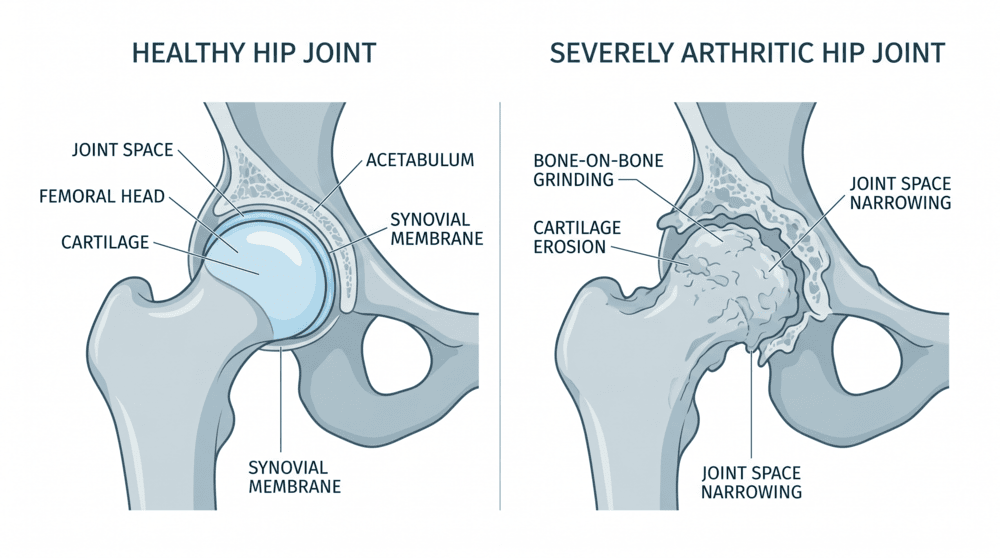
Total hip replacement is one of the most cost-effective and consistently successful surgeries in all of orthopedics. It is primarily recommended for patients with end-stage hip osteoarthritis, though other conditions also lead to the procedure. The most common underlying diagnoses include:
- Hip osteoarthritis: Progressive cartilage loss that leaves bone grinding directly on bone, producing constant pain, stiffness, and loss of motion
- Avascular necrosis: Loss of blood supply to the femoral head, causing bone collapse and severe joint destruction
- Rheumatoid arthritis: Inflammatory joint disease that damages the hip joint lining and cartilage over time
- Post-traumatic arthritis: Joint degeneration following a previous hip fracture or significant injury
- Congenital hip disorders: Structural abnormalities present from birth that accelerate joint wear over decades
Hip replacement is a quality-of-life decision, not an emergency one. However, waiting too long after conservative treatment stops working can lead to significant muscle weakness, gait changes, and bone loss that make surgery more complex and recovery longer. For a full overview of the non-surgical options available before hip replacement becomes necessary, read our detailed guide on hip pain treatment from conservative care to hip replacement.
“I tell every patient considering hip replacement the same thing,”
says Dr. Babatunde.
“The surgery itself has never been more reliable or more refined than it is today. The question is not whether it works. It is whether you have reached the point where the expected benefit outweighs the recovery process for your specific situation. That conversation is the most important thing we do together.”
How Total Hip Replacement Works
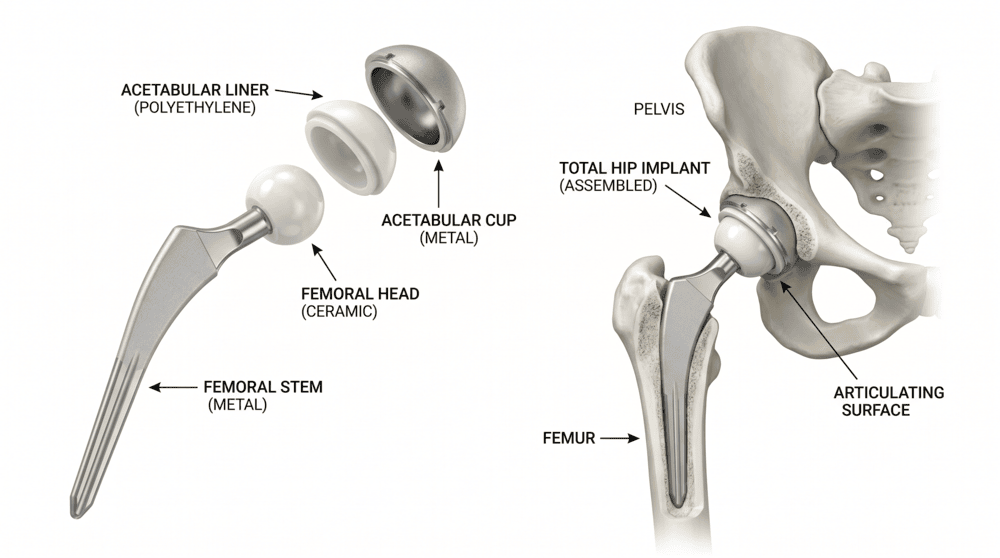
A total hip replacement removes the damaged ball and socket components of the hip joint and replaces them with precisely fitted artificial implants. The procedure typically takes 1 to 2 hours and is performed under general or spinal anesthesia.
The key steps of the procedure include the following:
- Dr. Babatunde accesses the hip joint through an incision at the back or side of the hip, depending on the surgical approach selected
- The damaged femoral head (the ball) is removed and the remaining femur is shaped to accept the new metal stem
- The acetabulum (the socket) is prepared by removing damaged cartilage and bone, then a new cup component is pressed or cemented into place
- A new femoral head (ball) made of metal or ceramic is attached to the stem
- The new joint is tested for proper movement and alignment, then confirmed with imaging before closure
- The incision is closed with sutures or staples and covered with a sterile dressing
Modern Surgical Approaches: What Has Changed
One of the most significant advances in hip replacement over the last two decades is the evolution of surgical approaches. The approach refers to the direction from which the surgeon accesses the hip joint, and each option involves different trade-offs in terms of muscle disruption, recovery speed, and technical precision.
Posterior Approach
The posterior approach is the most widely used technique for total hip replacement worldwide, accounting for the majority of procedures performed. The surgeon accesses the joint from the back of the hip with excellent visualization of both the socket and the femur. It is technically versatile and allows reliable implant positioning across a wide range of patient anatomies. Modern posterior approach techniques with careful soft tissue repair have significantly reduced the historically higher dislocation risk associated with this method.
Direct Anterior Approach
The direct anterior approach accesses the hip from the front, passing between muscle planes rather than cutting through them. Because no major muscles are detached, many patients experience less initial pain, faster return of hip strength, and earlier return to walking compared to the posterior approach. Additionally, the anterior approach allows real-time imaging confirmation of implant position during surgery, which improves accuracy. However, it does carry a steeper surgical learning curve and is not appropriate for every patient body type.
Direct Lateral Approach
The direct lateral approach accesses the joint from the side of the hip. It offers good visualization and a lower dislocation risk compared to the traditional posterior technique. On the other hand, it does involve partial detachment of the gluteus medius muscle, which can contribute to a temporary limp during recovery that resolves as the muscle heals.
Minimally Invasive Techniques
Minimally invasive hip replacement uses one or two shorter incisions rather than a single longer traditional incision. The goal is to reduce soft tissue damage, limit blood loss, and speed early recovery. Specifically, minimally invasive techniques are most beneficial for patients with favorable body composition and straightforward hip anatomy. For more complex cases, the priority is always accurate implant placement, even if that means a longer incision is the safer choice.
Hip Replacement Implants: Materials and Options
Modern hip implant technology has advanced dramatically. Today, patients benefit from implants designed to last 20 to 30 years or more with appropriate activity levels. The main material combinations used include:
- Metal on polyethylene: A metal ball moving in a highly cross-linked plastic socket. The most commonly used combination today, offering excellent durability and a well-established long-term track record
- Ceramic on polyethylene: A ceramic ball in a plastic socket. Ceramic produces less wear debris than metal and is often preferred for younger, more active patients
- Ceramic on ceramic: Both the ball and socket are ceramic, producing the lowest wear rates of any combination. Ideal for younger patients with high activity demands, though it carries a small risk of a harmless squeaking sound with certain movements
- Cementless vs. cemented fixation: Cementless implants use a porous surface that allows bone to grow directly into the implant over time. They are generally preferred for younger, more active patients with good bone quality. Cemented implants use bone cement for immediate fixation and are often chosen for older patients with softer bone.
Dr. Babatunde selects implant materials and fixation methods based on each patient’s age, activity level, bone quality, and body weight to maximize the lifespan and performance of the replacement joint.

Hip Replacement Recovery: A Realistic Phase-by-Phase Timeline
Understanding hip replacement recovery honestly and in detail is one of the most important things a patient can do before surgery. Recovery has become significantly faster with modern techniques, but it still requires patience, consistency, and respect for the healing process.
Day of Surgery and Hospital Stay
- Most patients get out of bed and take their first steps with assistance on the same day as surgery
- A physical therapist visits within hours of surgery to begin basic mobility and hip precaution education
- Hospital stays typically last 1 to 3 days for patients without complications
- Pain is managed through a combination of nerve blocks, anti-inflammatory medication, and oral pain relief
Weeks 1 to 2: Home Recovery and Wound Care
- Walking begins with a walker or crutches and progresses as comfort and strength allow
- Staples or sutures are typically removed at the 10 to 14 day follow-up visit
- Hip precautions are followed strictly during this period to prevent dislocation while soft tissues heal
- Outpatient or home-based physical therapy begins to restore range of motion and basic strength
Weeks 3 to 6: Building Independence
- Most patients transition away from a walker to a cane as confidence and strength improve
- Light daily activities including cooking, short walks, and personal care become comfortable and manageable
- Driving resumes at approximately 4 to 6 weeks for right hip surgery, often sooner for left hip in automatic vehicles
- A follow-up visit at 6 to 12 weeks confirms healing progress on X-ray and adjusts the rehabilitation plan accordingly
Months 2 to 3: Return to Normal Life
- Most patients resume normal daily activities including desk work, light exercise, and social outings comfortably
- Walking without a cane becomes possible for most patients during this phase
- Swelling and mild soreness after activity are normal and gradually decrease throughout this period
- Low-impact exercise including swimming, cycling, and walking is actively encouraged
Months 3 to 6: Strength and Full Activity
- Hip strength and endurance continue to improve steadily through progressive physical therapy
- Most patients feel like themselves again and report that hip pain is gone or dramatically reduced
- Return to moderate recreational activity including golf, hiking, and doubles tennis is typically cleared in this phase
- Full bone remodeling and implant integration continue for up to 12 months after surgery
Factors That Affect How Fast You Recover
Two patients who have the same surgery with the same surgeon can have noticeably different recovery timelines. Here is what actually drives the difference:
- Pre-operative strength and fitness: Patients who enter surgery with stronger hip and leg muscles consistently recover faster. Prehab physical therapy in the weeks before surgery is one of the most valuable investments a patient can make.
- Body weight: Higher body weight increases mechanical load on the new joint and can slow soft tissue healing. Reaching a healthier weight before surgery, where possible, improves both recovery speed and long-term implant longevity.
- Age and overall health: Younger patients with no major medical conditions generally recover faster, though excellent outcomes are routine across a wide age range.
- Surgical approach: Muscle-sparing approaches like the anterior technique are associated with faster early recovery of hip strength and shorter time to walking without assistance.
- Physical therapy compliance: Patients who complete their full rehabilitation program, attend every session, and maintain their home exercise routine consistently outperform those who do not.
- Smoking: Smoking impairs tissue healing, increases infection risk, and slows bone integration with cementless implants. Stopping smoking before surgery meaningfully improves outcomes.
Robotic and Technology-Assisted Hip Replacement
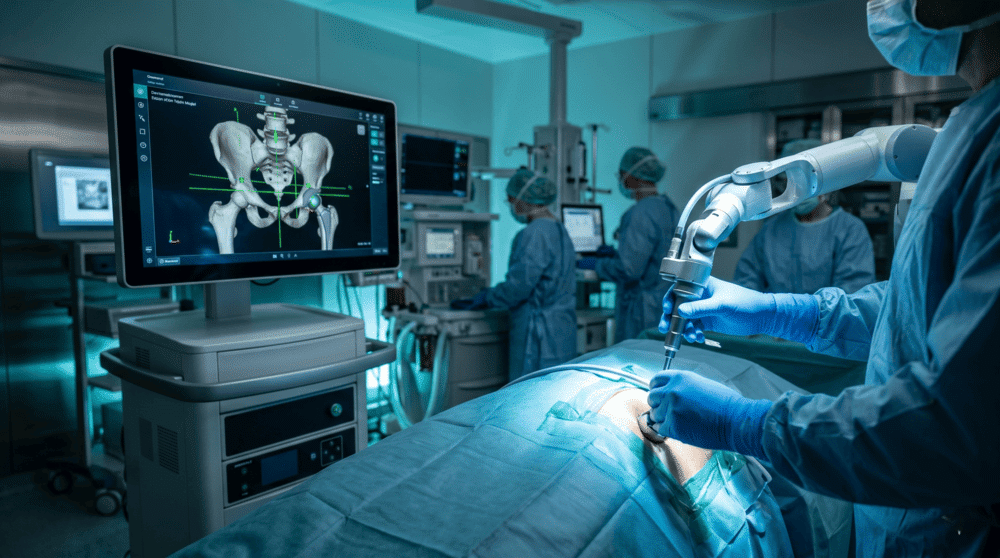
One of the most exciting developments in modern hip replacement is the integration of robotic assistance and advanced imaging technology into the surgical process. Robotic-assisted systems allow surgeons to plan implant positioning digitally before the procedure and receive real-time guidance and feedback during surgery to achieve placement within very tight accuracy tolerances.
Furthermore, advanced imaging tools allow intraoperative confirmation of leg length equality and implant alignment, two factors that directly influence long-term joint function and patient satisfaction. As a result, technology-assisted hip replacement is increasingly the standard of care in high-volume orthopedic centers and continues to improve outcomes across age groups and complexity levels.
Life After Hip Replacement: What to Expect Long-Term
For the vast majority of patients, total hip replacement delivers lasting, transformative results. Key long-term expectations include the following:
- Modern hip implants are designed to last 20 to 30 years or more in appropriately active patients
- Most patients return to low-impact recreational activities including walking, swimming, cycling, golf, and light hiking without restriction
- High-impact activities such as running and contact sports are generally discouraged long-term to protect implant longevity
- Follow-up visits at regular intervals allow monitoring of implant wear, bone health, and any early signs of loosening
- Revision surgery is necessary in a minority of cases, typically decades after the original procedure, when implant wear or loosening occurs
Get Expert Hip Replacement Care at City Orthopaedics
Dr. Oladapo M. Babatunde, MD, FAAOS brings fellowship-trained expertise, genuine patient-focused communication, and a thorough approach to every hip replacement consultation at City Orthopaedics Sports Medicine. Whether you are exploring whether surgery is the right next step or ready to move forward with a procedure, every patient leaves a consultation with clarity, not pressure.
City Orthopaedics Sports Medicine sees patients across East Rutherford, Paramus, and West Orange, NJ. No referral is required and most major insurance plans are accepted.
Book your hip replacement consultation at City Orthopaedics Sports Medicine today and take the first step toward lasting pain relief and a better quality of life.
Frequently Asked Questions About Hip Replacement Surgery
How long does hip replacement surgery take?
Total hip replacement surgery typically takes 1 to 2 hours from incision to closure. Cases involving additional complexity, such as significant bone deformity, revision of a prior replacement, or difficult anatomy, may take longer. Most patients go home within 1 to 3 days after surgery, depending on their overall health and how quickly they progress with early physical therapy milestones.
What is the difference between total hip replacement and partial hip replacement?
A total hip replacement replaces both the ball (femoral head) and the socket (acetabulum) with artificial components. A partial hip replacement, also called hemiarthroplasty, replaces only the ball portion and is most commonly used in older patients following a hip fracture where the socket itself remains healthy. For patients with hip osteoarthritis or avascular necrosis, total hip replacement is the appropriate and more durable procedure.
How painful is hip replacement recovery?
Most patients are surprised by how manageable post-surgical pain is with modern pain control techniques. A combination of nerve blocks, anti-inflammatory medications, and oral pain relief keeps the majority of patients comfortable enough to begin walking on the day of surgery. Sharp pain typically subsides significantly within the first 2 to 4 weeks. After that, residual soreness and swelling after activity are normal but manageable without strong medication for most patients.
When can I return to normal activities after hip replacement?
Most patients return to light daily activities within 3 to 6 weeks, resume driving between 4 and 6 weeks, and feel largely back to normal by 3 months post-surgery. Return to more demanding activities like hiking, golf, and recreational sport is typically cleared between 3 and 6 months based on individual progress. Full recovery and implant integration continue for up to 12 months.
How long do hip replacement implants last?
Modern hip implants are engineered to last 20 to 30 years or more in appropriately active patients. Longevity depends on implant material, patient activity level, body weight, and bone quality. Patients who maintain a healthy weight, avoid high-impact loading, and attend regular follow-up visits give their implants the best chance of lasting as long as possible before any revision is needed.
Where can I get hip replacement surgery in New Jersey or New York?
City Orthopaedics Sports Medicine provides comprehensive hip replacement evaluation, surgical care, and rehabilitation at offices in East Rutherford, Paramus, and West Orange, NJ, and Manhattan, NY. Dr. Oladapo M. Babatunde, MD, FAAOS, leads hip and joint replacement care across all locations. Book your consultation here.